

Last updated October 30, 2026
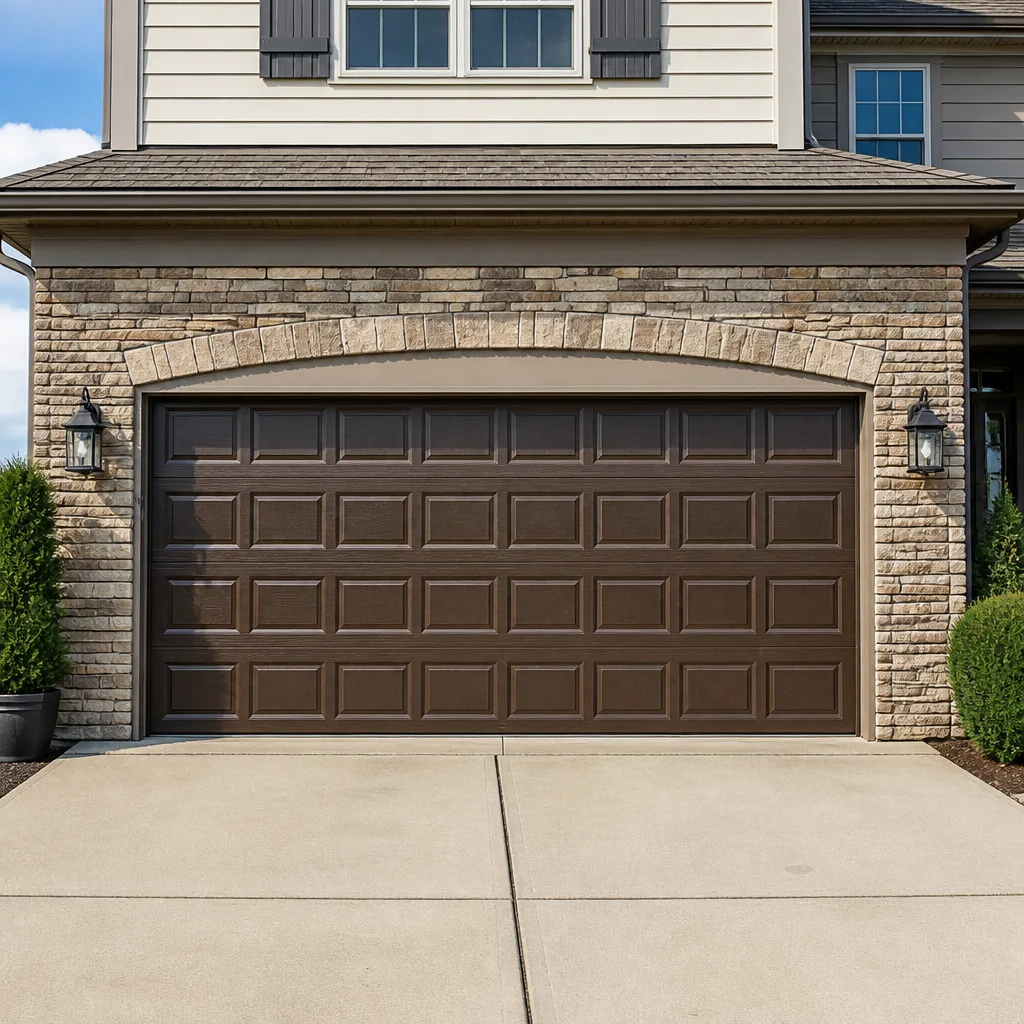 Raised-panel steel
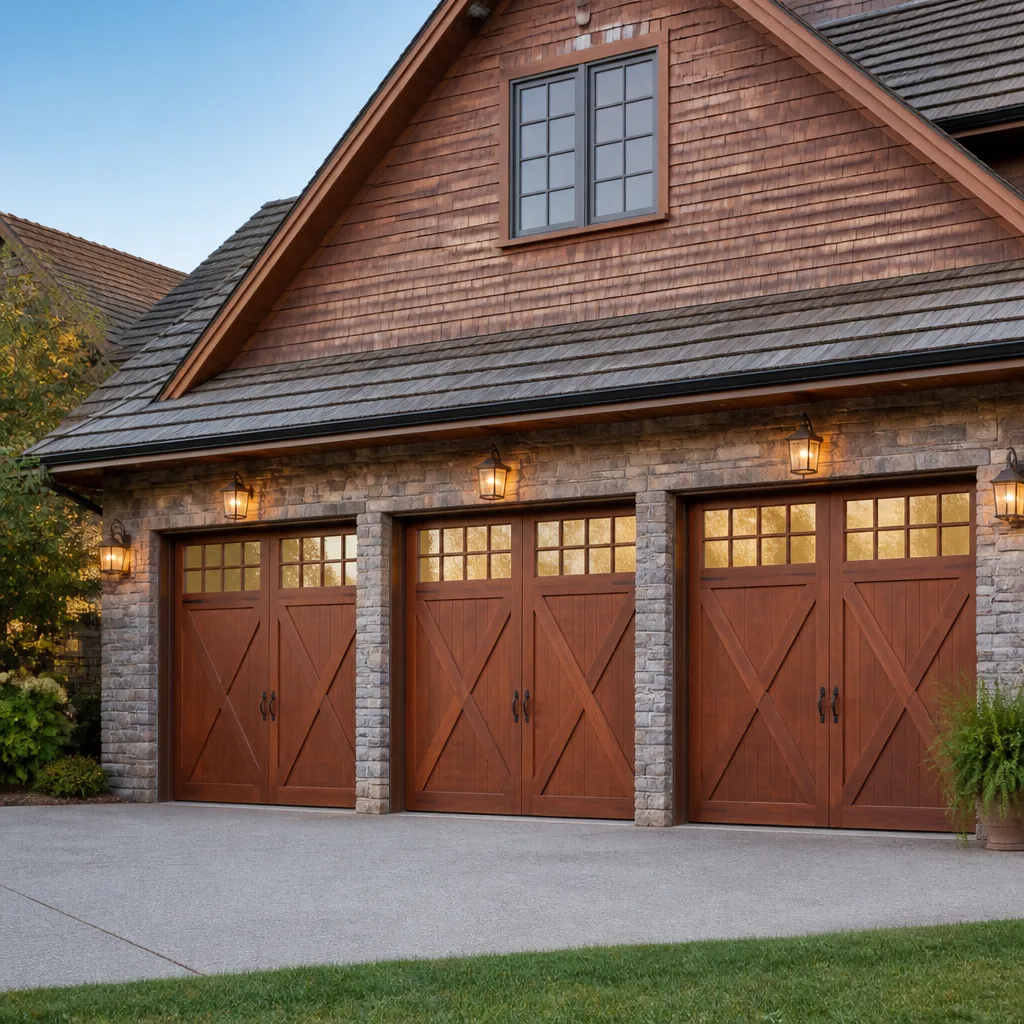 Carriage house
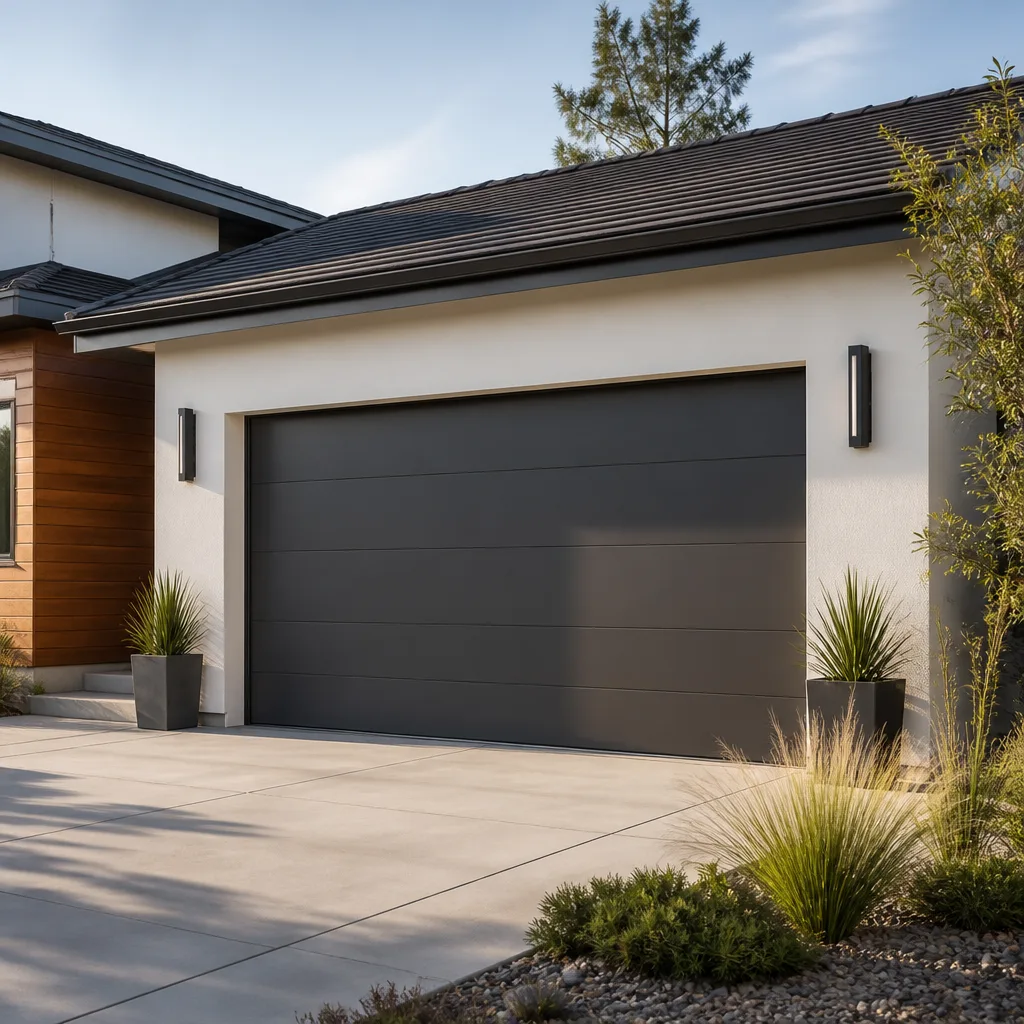 Modern flush
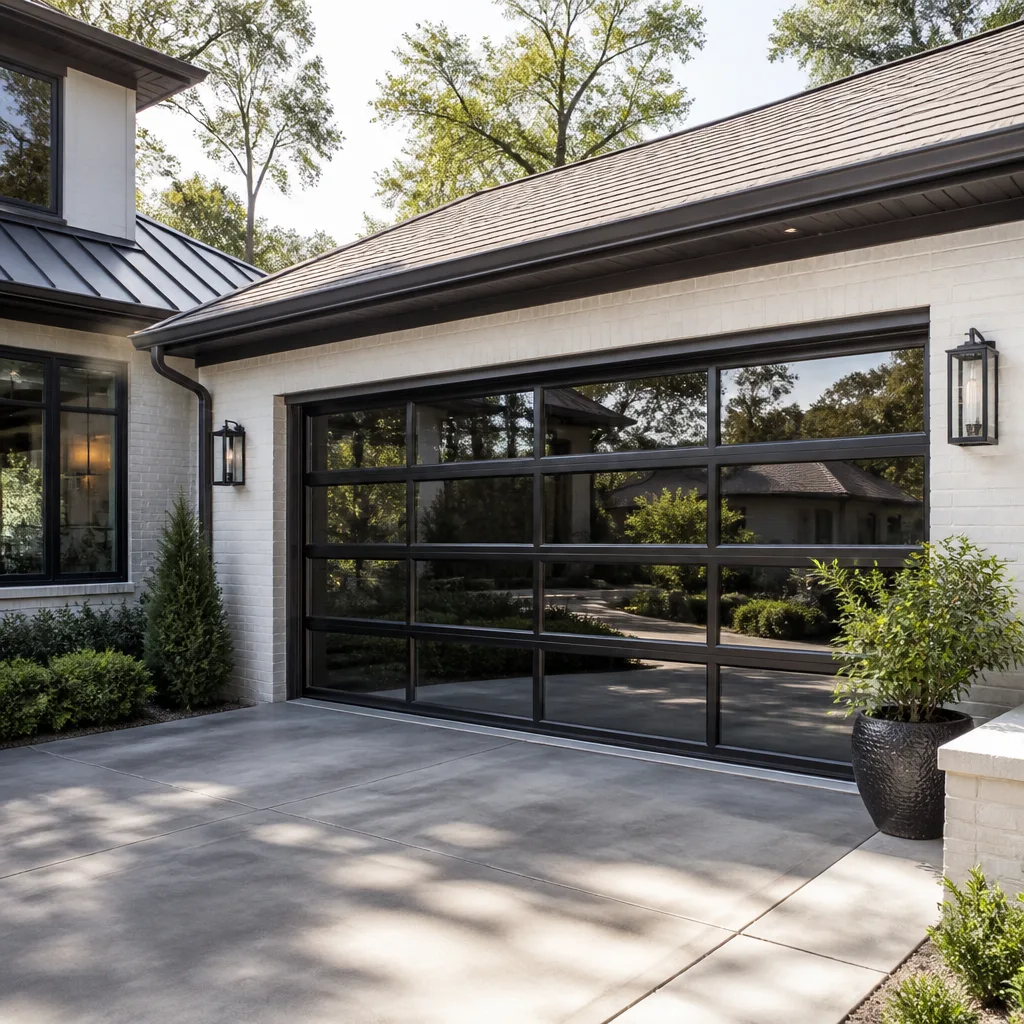 Full-view glass
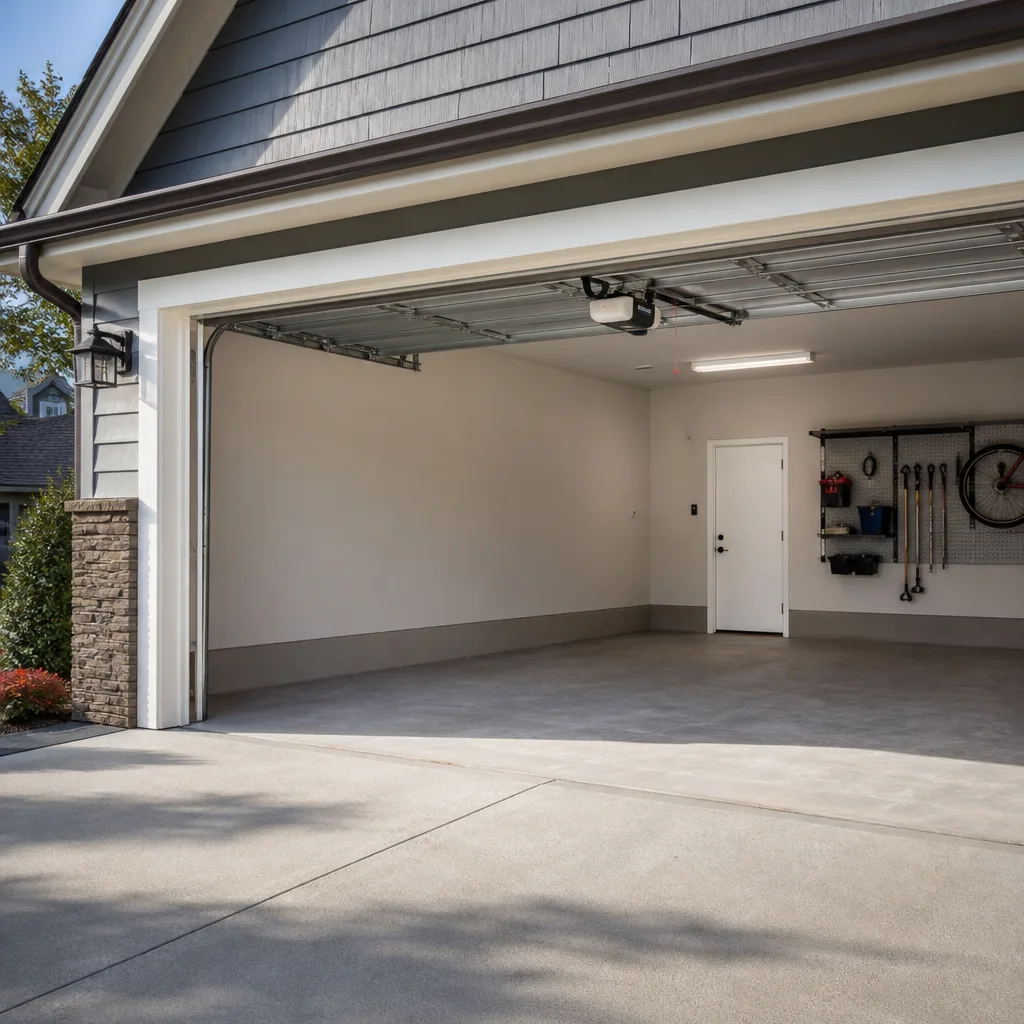 LiftMaster openers
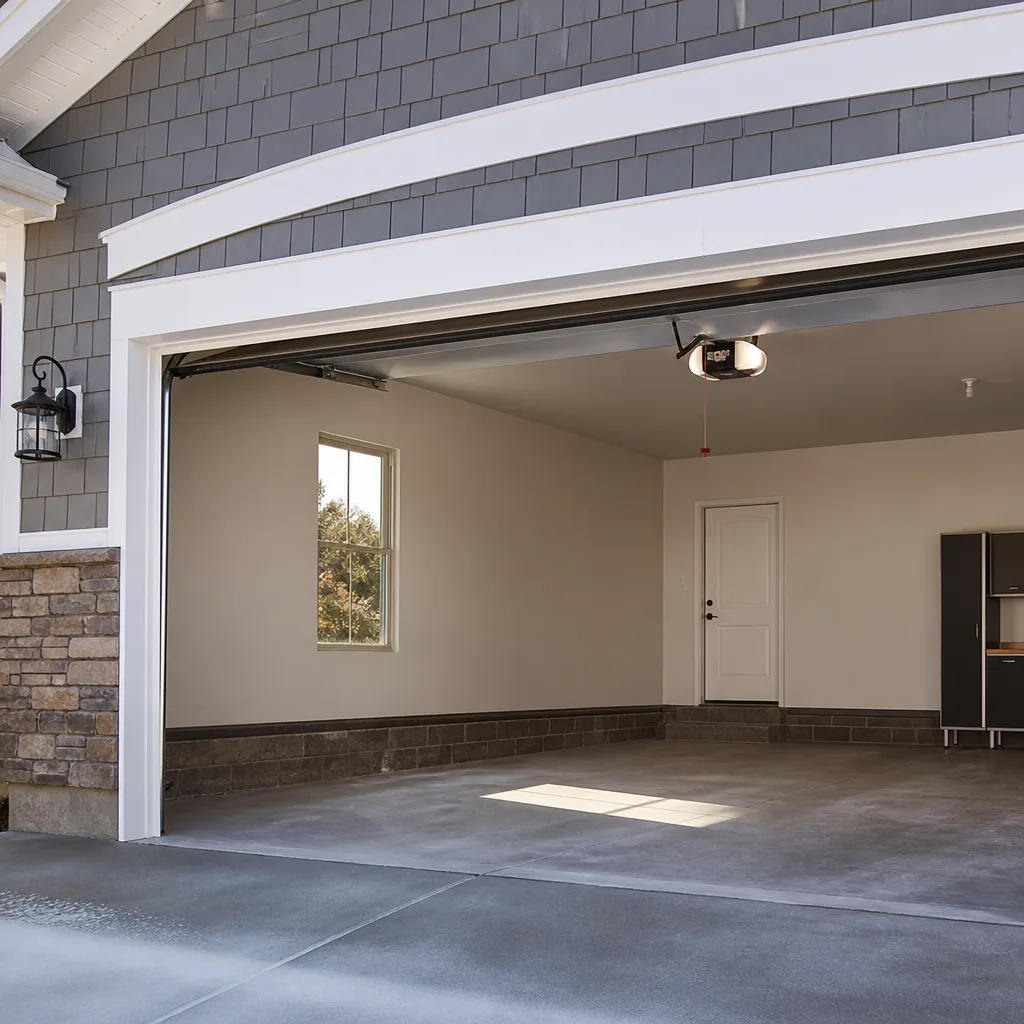 Chamberlain openers
Full 25-point door and opener safety check with every visit - springs, cables, rollers, tracks, and your LiftMaster or Chamberlain opener included
You get a price before we start. It does not change when the truck arrives.
Get your free estimateGarage Door Repair Troubleshooting: Common Problems and How to Fix Them
If your garage door is making a new noise, the noise is rarely the actual problem. It’s the last symptom of a mechanical issue that started weeks or months earlier. A squeak that began as a faint chirp during rainy weeks, a slight hesitation when the door lifted past the halfway point, a subtle lean to one side you only notice when standing in the driveway at dusk. Each of these is your door communicating. Fix only the noise, and you’ll be back here in 60 days. Fix the upstream cause, and the noise disappears on its own. We’ve spent years troubleshooting doors across Irvine, from tract-home roll-ups in Woodbridge to custom carriage doors in Shady Canyon, and the pattern holds: doors fail systemically, not symptomatically. This guide teaches you to think like a diagnostician. You’ll learn how to read your door’s behavior, isolate whether the problem is in the opener or the door itself, run two safe tests before you ever pick up a wrench, and know which fixes are yours to make and which ones carry serious risk.
Quick Answer
Our Garage Door Repair services start with a simple split: opener problems affect how the door moves, while door problems affect what moves. A door that won’t open could be a disconnected opener, a broken spring, or a blockage in the tracks. The fastest safe path is to check the emergency release cord, test the door’s balance manually, and isolate noise to either the opener motor or the door hardware. Many issues, like sensor misalignment or a stripped gear, are inexpensive fixes. But torsion springs and cables are dangerous and should only be handled by a trained professional.
Styles & brands we work with
Table of Contents
- Why Your Garage Door Is a System, Not a Collection of Parts
- Opener Problems vs. Door Problems: The Split That Prevents Misdiagnosis
- How to Read Noise, Speed, and Hesitation as Diagnostic Signals
- The Two Safe Tests Every Homeowner Can Run Before Calling
- Common Symptoms and Their Most Likely Root Causes
- Which DIY Fixes Void Manufacturer Warranties
- Brand-Specific Notes: What We See from Wayne Dalton, Raynor, Craftsman, and LiftMaster Systems
- When a Door That ‘Works Fine’ Is One Cycle Away from a Spring Failure
Why Your Garage Door Is a System, Not a Collection of Parts
Most troubleshooting guides treat a garage door as a series of isolated components: the spring, the rollers, the track, the opener. That model works if you only want to replace parts. It fails if you want to understand why something broke. In practice, every component on a garage door transfers load to the next component in a chain. A worn roller isn’t just a worn roller. It’s a worn roller that forces the door to travel slightly off-axis, which puts uneven tension on the hinges, which changes the stress pattern on the spring, which makes the opener motor work harder and heat up faster. Six months later you have a failed opener gear and no memory of the roller that started it.
In Irvine, where summer temperatures routinely push garage interiors past 100 degrees and the marine layer brings damp mornings in June, this systemic reality is amplified. Metal expands and contracts. Lubricant thins in heat and stiffens in cold. Wood doors in older neighborhoods near the University of California campus absorb moisture differently than steel doors in newer developments in Portola Springs. When we diagnose a door, we read the whole system, not just the part that failed. That’s how you fix a problem once instead of three times.
- The opener only adds force. It was never designed to carry the door’s weight. If it’s working harder than it should, something downstream is binding.
- Springs do the heavy lifting. A properly balanced door feels nearly weightless when you lift it by hand. If it doesn’t, the spring is tired or failing.
- Track and rollers control the path. Friction anywhere in the path becomes stress everywhere in the system.
- Weatherstripping and seals absorb the environment. A swollen bottom seal can drag on the threshold enough to trip the opener’s force sensor.
This is why our approach at Carriage House Garage Door Co home always starts with observing the whole door in motion, never just the part the homeowner thinks is broken.
Opener Problems vs. Door Problems: The Split That Prevents Misdiagnosis
Here’s the single most useful diagnostic move you can make: before you call anyone, determine whether the problem lives in the opener or the door. Disconnect the door from the opener using the red emergency release cord hanging from the opener rail. Now lift the door by hand. You may need to curl your fingers under the handle. In California, a rental property or older home may have a door with no handle pull, so place both palms flat against the bottom panel and lift gently.
Interpreting the Manual Lift Test
- Door lifts smoothly and stays open on its own. The door and springs are healthy. Your problem is in the opener: gears, logic board, capacitor, or travel limits.
- Door feels heavy and wants to fall. The spring is losing tension or has broken. Your opener has likely been overworking, but the root cause is the spring.
- Door lifts but drifts down. Classic weak spring signal. The door needs a spring replacement or tension adjustment.
- Door jerks, catches, or scrapes. The problem is mechanical: track alignment, roller wear, or a loose bracket.
- Door won’t move at all. Check for physical obstruction, a locked door, or a bent track section.
Misdiagnosis happens when homeowners see a door that won’t open and immediately buy a new opener, only to discover the old opener was fine and the spring had broken months ago. Or, more common in our Irvine service calls, a homeowner replaces a spring without realizing the opener’s travel limits had been set incorrectly from day one, and the door never traveled fully closed. The two halves of the system are connected, but they fail differently.
We work on the whole system. When we repair a door, we check the opener’s settings. When we repair an opener, we test the door’s balance. It’s the only way to keep one half of the repair from causing the other half to fail again.
How to Read Noise, Speed, and Hesitation as Diagnostic Signals
Noise is data. Most people hear a garage door and think “that’s loud.” A trained ear hears a specific frequency, location, and timing, and uses that to narrow the root cause before touching anything. Here’s a practical field guide to what different sounds mean.
- A high-pitched squeal that comes and goes with the door’s movement. This is almost always dry rollers, dry hinges, or a dry bearing in the end plate. On doors near the Irvine coast, salt air accelerates metal-on-metal wear. A targeted application of lithium grease to the roller bearings and hinge pins often resolves it in under ten minutes.
- A grinding, growling sound when the door is moving only. Grinding noise that follows the door’s travel points to the track, not the opener. The rollers are likely worn or the track has been knocked slightly out of alignment. In neighborhoods with narrow alleys and tight driveways, like some older sections of Northwood, a car bumper nudging the track is common.
- A grinding sound coming from the opener unit itself. On chain-drive openers, this is often the gear and sprocket assembly beginning to fail. The gear is plastic on most residential openers and strips after years of use. The part is inexpensive. The labor is moderate.
- A loud pop or bang, followed by a door that doesn’t move. That was the torsion spring breaking. It is loud enough to hear from inside the house. If this happens, do not attempt to open the door. Call a professional. The door is now dangerously tensionless.
- A rhythmic thumping or banging as the door travels. Look for a loose belt or chain, a roller that has come out of the track, or a section of track that has a flat spot from impact. Thumping that gets faster as the door moves faster is rotational. It’s a wheel, a roller, or a pulley.
Speed and Hesitation Signals
Your door should travel at a consistent speed from fully closed to fully open. Variations in speed are diagnostic.
- Door slows noticeably at a single point in the travel. This is often a track misalignment that pinches the rollers at a specific spot. Mark the location with a piece of tape on the wall, then watch it on the next cycle to confirm it’s always the same spot.
- Door hesitates before moving. On an opener, this can be a capacitor beginning to fail. The starter capacitor gives the motor its initial kick. When it weakens, the motor struggles to start, then runs fine once moving. On the door itself, hesitation can mean the spring is at the edge of its adjustment and not providing enough initial lift.
- Door starts fast, then slows through the mid-travel. This is a classic weak spring. The opener is providing more force at the bottom of the travel to get the door moving, but the spring is not contributing its share through the middle of the arc.
- Door reverses before fully closing. The safety sensors are misaligned or obstructed, or the force setting is too sensitive. Not a door problem. An opener adjustment problem.
If you’re seeing speed changes and hearing noise at the same time, document both. The combination will help a professional diagnose faster. Our technicians in Irvine often ask homeowners to record a video of the door on their phone before calling Garage Door Repair in Costa Mesa or a sister city, because sound and speed together tell us more in ten seconds than a verbal description does in two minutes.
The Two Safe Tests Every Homeowner Can Run Before Calling
You don’t need to be mechanically inclined to run these two tests. They require no tools and take five minutes. What they give you is a clear picture of your door’s balance, which is the single most important diagnostic variable. If your door is balanced, your opener is happy. If your door is unbalanced, something is wrong with the spring, and no amount of opener adjustment will fix it.
Test One: The Manual Balance Test
- Close the garage door completely.
- Pull the red emergency release cord to disconnect the door from the opener. The cord hangs down from the opener rail.
- Lift the door manually to the halfway point, roughly waist height.
- Let go.
- Observe what the door does.
A correctly balanced door will stay in place, maybe drifting a few inches up or down at most. A door that drops quickly has a spring that is too weak or broken. A door that rises on its own has a spring that is over-tensioned. Both conditions are problems. Over-tensioned springs are especially hazardous because they’re storing too much energy and can fail catastrophically.
Test Two: The Force Sensor Test
This test checks whether the opener’s automatic reversal mechanism is functioning. The opener should reverse if it encounters resistance while closing.
- Reengage the opener by pulling the emergency release cord again and pressing the wall button once. The carriage should reconnect to the chain or belt.
- Place a 2×4 board flat on the floor in the center of the door’s path.
- Press the close button.
- Watch what happens when the door contacts the board.
The door should reverse within a second or two of contacting the board. If it does not reverse, the force setting is too high. This is a safety issue, especially in homes with children or pets. The fix is a simple adjustment on the opener unit, but it’s a setting that matters. A door that doesn’t reverse can cause serious injury. In our experience, many openers in older Irvine homes were installed with factory force settings and never adjusted for the specific door they’re lifting. That’s a recipe for early gear failure and a door that fights itself.
Run both tests once a year. Think of it as a tire pressure check for your garage. It takes five minutes and alerts you to problems months before they become emergencies.
Common Symptoms and Their Most Likely Root Causes
Here is a structured breakdown of the symptoms we hear most often from homeowners in Irvine, paired with the root cause we find most frequently. Note that these are starting points, not final answers. Every door is different, and every neighborhood in Irvine has its own mix of door types, ages, and environmental conditions. For deeper reading, see our Garage Door Warning Signs: A Irvine Homeowner’s Reference Guide.
Symptom: Door opens but won’t close
- Photo eye blockage: The safety sensors at the bottom of the door tracks are misaligned or have something in front of them. Look for a small light on each sensor. If one light is blinking, that sensor is out of alignment. The fix is usually a one-minute pointing adjustment.
- Force setting too sensitive: The opener thinks it’s hitting an obstruction when it isn’t. This often happens in winter when cold weather makes the door move slightly slower. A small force adjustment fixes it.
- Limit switch problem: The opener’s travel limit is set too far down, and the door bottom is hitting the concrete before the opener thinks it should stop. The opener reverses because it senses resistance. Reset the travel limit.
Symptom: Door closes but immediately reopens
This is almost always the photo eye. The sensors are misaligned, dirty, or the wire to one sensor is loose. Clean both sensor lenses with a dry cloth. Check that both sensors are pointing directly at each other. If the lights are solid, check for a broken wire, especially where the wire runs across the top of the garage and down to the sensor. Rodents in Irvine garages chew through low-voltage wire more often than you’d expect.
Symptom: Door moves crooked or one side is lower
A door that goes up crooked is a cable problem. Each side of the door has a lifting cable connected to the bottom bracket and the spring system. If one cable is broken, frayed, or has jumped off its drum, the door loses support on that side and tilts. Do not run the door in this condition. The remaining cable is now carrying the entire load and could snap. This is a professional repair. Springs and cables under tension are dangerous, and we don’t recommend anyone attempt this without proper winding bars and experience.
Symptom: Door makes a scraping noise against the track
Look at the gap between the door and the track on both sides. A properly spaced track allows the rollers to ride in the track without the door’s edges touching the metal. If you see rub marks or metal shavings on one side, that track has been pushed inward. Common causes include a car bumping the track, a loose track bracket that allowed the track to shift, or a house settling in one of Irvine’s hillside communities where soil movement is a factor. The fix is a track realignment, which requires loosening the brackets, repositioning the track, and re-tightening with the door held in the correct position.
Symptom: Door opens slowly in cold weather
This is usually lubricant thickening in the rollers and hinges, not a spring issue. But it can also be a worn spring that shows its weakness more clearly when the lubricant adds resistance. If you’ve noticed the door moving slower over months, regardless of temperature, it’s the spring. If the slowdown only happens in winter and the door is fine in summer, try re-lubricating the rollers and hinges with a silicone-based lubricant.
For any of these symptoms, our Garage Door Opener Repair in Costa Mesa service handles the opener side, while our door repair service covers the mechanical side. Both are the same team. That division of labor matters less to you than it does to us: when we arrive at a home, we’re equipped to fix either half of the system on the spot.
Which DIY Fixes Void Manufacturer Warranties
Most homeowners don’t realize that a garage door is covered by multiple warranties from different manufacturers. The door panels have one warranty. The springs have another. The opener has a third. And each warranty contains language that can be voided by specific DIY actions. Here’s what to know before you reach for a tool.
Spring work without proper tools
Torsion springs are covered by manufacturer warranties, often for 5 to 10 years or longer, but that coverage is conditional. If the spring snaps and the manufacturer’s inspector determines the failure was caused by improper installation or adjustment, the warranty is void. Homeowners who attempt spring adjustments with improper tools and techniques risk both their safety and their coverage. We recommend letting a professional handle any spring work. The cost of a professional spring replacement is far less than the cost of a voided warranty and a damaged door.
Opener modification
Opening the opener’s cover may not void the warranty, but modifying the logic board, changing the motor, or rewiring the unit almost certainly will. LiftMaster and Craftsman openers typically carry a multi-year motor warranty. The moment you open the unit and start cutting wires or soldering, that warranty is gone. We work on LiftMaster and Craftsman systems regularly at Garage Door Installation in Costa Mesa and surrounding areas, and we see this often: a homeowner has a $12 gear part fail, opens the unit to replace it, and accidentally strips a wire or damages the logic board. The opener was under warranty. Now it isn’t.
Track and panel modifications
If your door is under a warranty that covers panel defects or track issues, any modification to the door structure can void that coverage. Drilling new holes, cutting panels, or bending tracks to “fix” a rub all fall into this category. The warranty covers manufacturing defects, not homeowner modifications.
How to Stay Protected
- Read your warranty before doing any work on the door or opener.
- Keep records of professional repairs. Many warranties require that work be done by a qualified technician to maintain coverage.
- For spring work, cable work, or any repair involving the door’s lifting mechanism, call a professional. The money you save doing it yourself is a fraction of the cost of a voided warranty, a damaged door, or a serious injury.
- If a repair is covered under warranty, contact the manufacturer or a qualified repair company before attempting any work. We diagnose warranty-covered failures every week in Irvine and can guide you through the claim process.
Brand-Specific Notes: What We See from Wayne Dalton, Raynor, Craftsman, and LiftMaster Systems
Because we work on doors and openers across brands, we see patterns that single-brand dealers don’t. Each manufacturer has its own engineering approach, and each has its own typical failure points. Knowing your brand gives us a head start on diagnosis.
Wayne Dalton
Wayne Dalton doors are common in planned Irvine communities, especially in developments built in the 1990s and early 2000s. Their TorqueMaster spring system is unusual: instead of exposed torsion springs, the springs are enclosed inside a tube. This design is safer and cleaner looking, but it makes the springs harder to inspect. A homeowner can’t see visual wear the way they can on an exposed spring. The most common Wayne Dalton issue we encounter is a TorqueMaster spring that has lost tension gradually without visible indication, leaving the homeowner with a door that feels heavy but shows no obvious broken part. If you have a Wayne Dalton door and it suddenly feels heavier, that enclosed spring is the likely culprit.
Raynor
Raynor doors are built heavier than most. The steel is thicker, the hinges are more substantial, and the doors tend to last longer than many competitors. But that weight means the springs work harder from day one. A Raynor door that’s been in service for 8 to 10 years often needs spring replacement sooner than a lighter door from another brand would. We also see Raynor openers with unique limit switch designs that require brand-specific adjustment procedures. If you have a Raynor opener that’s reversing or stopping at the wrong point, don’t follow a generic online guide for a Chamberlain or Genie. The procedure is different.
Craftsman
Craftsman openers are among the most common units we service in Irvine. They were sold through Sears for decades and are still widely installed. The most frequent Craftsman issue is a stripped gear. The main gear is plastic on most Craftsman models, and after 7 to 10 years of daily use, the teeth wear down until the opener makes a grinding noise but the door doesn’t move. The gear replacement is a straightforward repair, but many homeowners mistake the grinding for a motor failure and buy a new opener. Don’t make that mistake. A $30 gear is a lot cheaper than a $300 opener.
LiftMaster
LiftMaster is the professional-line brand from Chamberlain, and the openers are generally well-built. Our most frequent LiftMaster call is for travel limit drift. The opener slowly forgets where the closed position is, usually because the travel limit gears inside the unit are worn. The symptom is a door that doesn’t close all the way or a door that closes and then reverses a few inches. The fix is usually a travel limit adjustment or a replacement of the travel module. LiftMaster openers also have a known issue with capacitor failure on units that are 10+ years old. The door hesitates or hums before moving. A capacitor replacement is a simple fix if diagnosed correctly.
Working across brands means we’re fluent in the quirks of each. That’s the point. When we show up at an Irvine home with a Wayne Dalton door and a LiftMaster opener, we know both. That’s not as common as you’d hope in the garage door trade.
When a Door That ‘Works Fine’ Is One Cycle Away from a Spring Failure
Here’s the scariest fact in garage door troubleshooting: most spring failures happen without warning to the casual eye. The door opens and closes, the opener hums along, and then one afternoon the spring snaps with a sound like a gunshot. The door that worked fine at breakfast is a 150-pound dead weight by dinner.
The warning signs are almost always present, but they’re subtle.
- A visible gap in the torsion spring. Torsion springs are coiled tubes. When they break, they separate into two pieces, and a gap appears between the coils. But before they break, they may show small gaps or uneven coil spacing. Look at your spring with the door closed. The coils should be evenly spaced along the entire length of the spring.
- Door balance drift. Run the manual balance test we described earlier. If the door drifted slightly before and drifts more now, the spring is fading. Springs don’t fail instantly. They lose tension gradually, and the door gets heavier by small increments.
- Opener strain sounds. As the spring weakens, the opener has to work harder. If your opener sounds different than it did a year ago, if it’s louder, if the motor labors, pay attention. The opener is telling you something.
- Date of manufacture. Most torsion springs are rated for 10,000 to 15,000 cycles. In a household that opens the door 3 to 4 times a day, that’s 7 to 10 years. In a busy Irvine household with three cars and a home gym in the garage, that’s 4 to 5 years. If your springs are older than 7 years and you’ve never had them checked, they’re on borrowed time.
Here’s the part most guides don’t mention: a spring rarely breaks while the door is sitting closed. It breaks when the spring is under maximum tension, which is when the door is closing. The door comes down, the spring stretches, and the fatigue point finally gives way. If you’re standing in the garage when it happens, it will scare you. If the door is halfway down and the spring snaps, the full weight of the door is now on the opener alone, and the opener may not hold it. A door that crashes down can cause serious injury to anyone underneath it.
We recommend having your springs and cables inspected at least every two years, especially if your door is over 5 years old. This is a quick visual inspection. We’re not trying to sell you a spring replacement you don’t need. We’re trying to catch one before it fails at 11 p.m. on a holiday weekend. In Irvine, where many garages are converted into workshops, gyms, and storage areas, a functioning door isn’t just convenience. It’s access to a room you use every day.
Common Mistakes to Avoid
- Replacing the opener when the spring is broken. A door that won’t open is often a spring problem, not an opener problem. The spring carries the weight. The opener only guides the movement. Replacing the opener because the door won’t move is like replacing the steering wheel because your tires are flat.
- Lubricating the tracks. Rollers and hinges need lubrication. Tracks do not. Grease on the tracks collects dust and grime, which becomes a sandpaper paste that wears out rollers faster. We see this in Irvine homes with dusty garages from the seasonal Santa Ana winds. Keep the tracks clean and dry. Grease the roller bearings and hinge pins only.
- Adjusting the opener’s force settings without testing the door’s balance first. If the spring is weak, adjusting the force settings only masks the problem. The opener will strain harder, the gear will strip sooner, and the underlying spring issue will still be there.
- Ignoring a noisy door. Noise is the earliest warning signal a door gives. A door that starts squeaking and a door that breaks a spring six months later are often the same door. Noise is free diagnostics. Use it.
- Attempting torsion spring repair with improvised tools. Torsion springs are under hundreds of pounds of torque. The winding bars you need are specific steel rods, not screwdrivers or pry bars. DIY spring work is the most common cause of serious garage-related injuries. This is not a YouTube project. Hire a professional.
- Fixing a cosmetic issue while ignoring an underlying mechanical one. A dent in a panel is a cosmetic issue. A bent track is not. If you fix the dent and leave the track bent, the door will eat rollers, bind against the track, and eventually damage the new panel too.
- Not testing the auto-reverse safety feature after any garage work. If you’ve adjusted anything on your door or opener, run the force sensor test we described earlier. This is a safety check that takes 30 seconds and should be part of every garage door maintenance routine in Irvine households.
See the difference
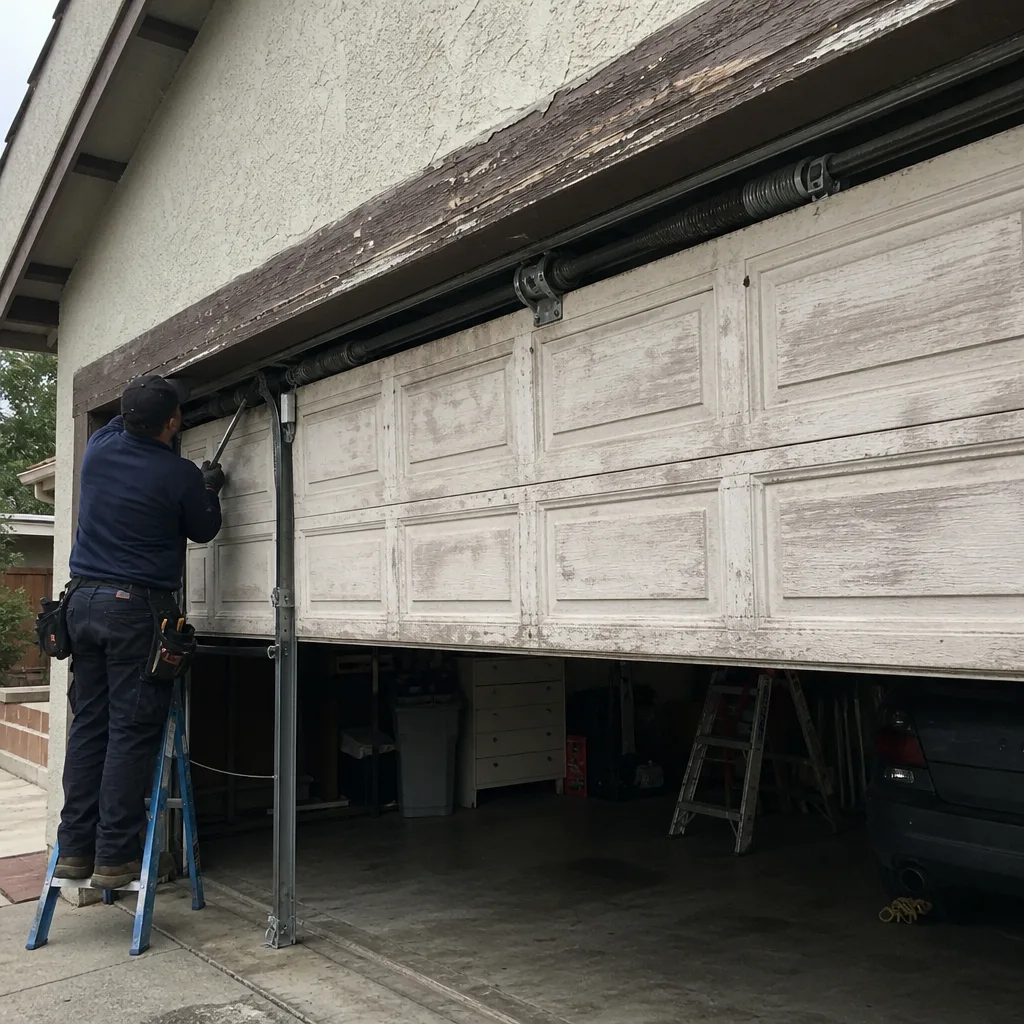 Before
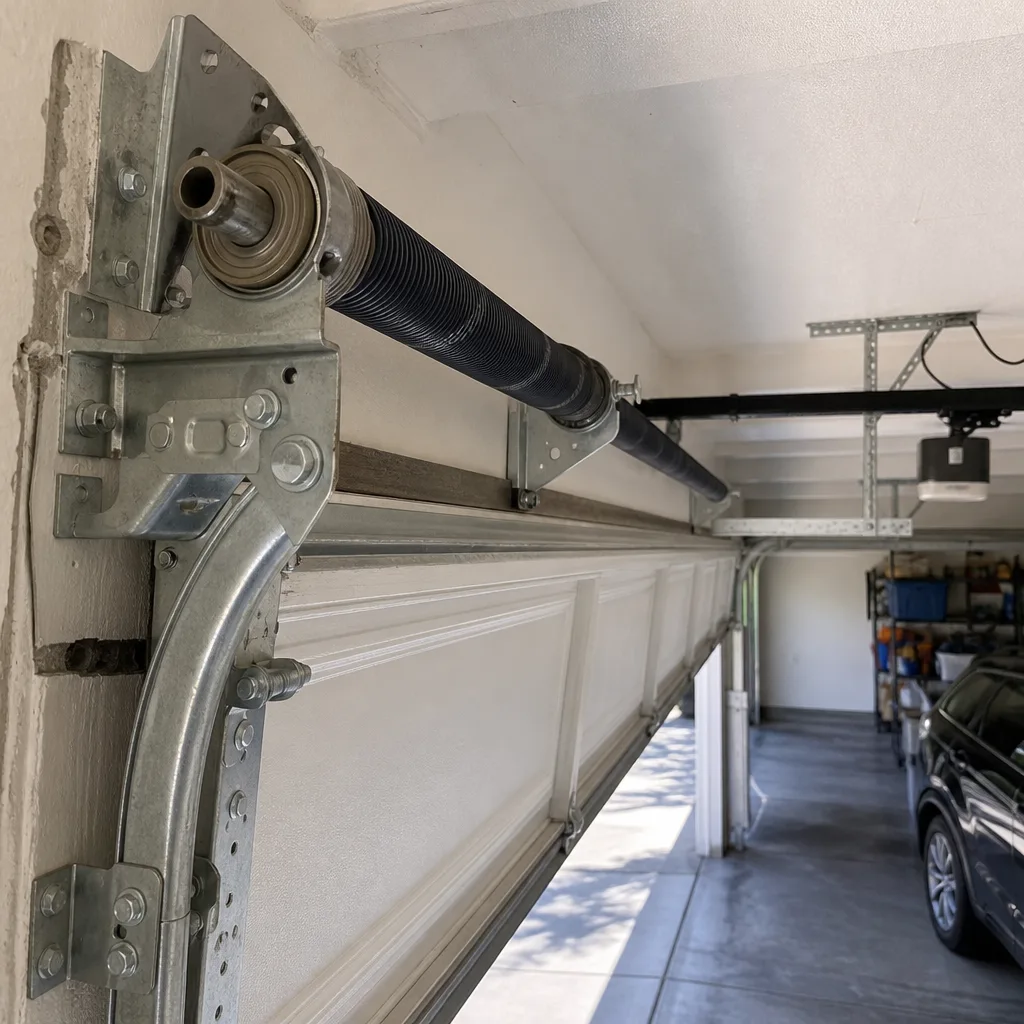 After
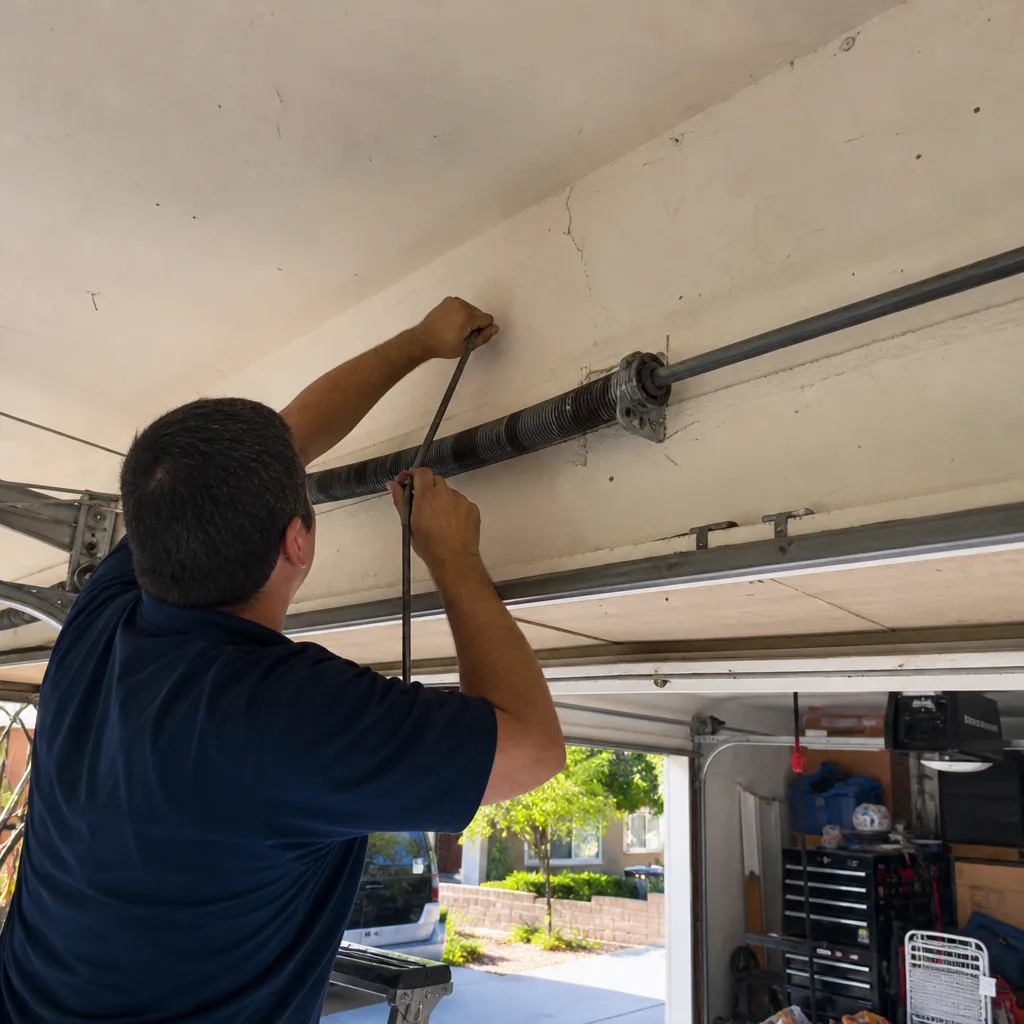 Before
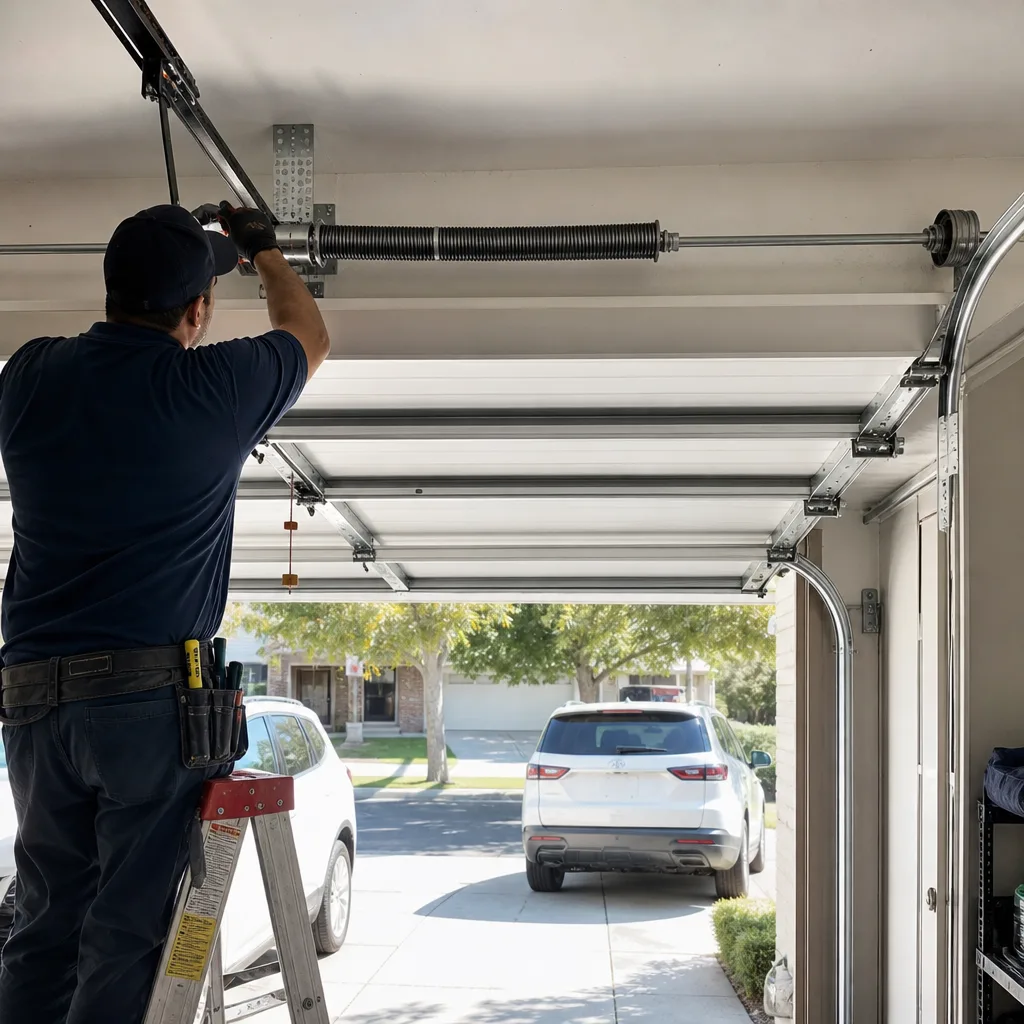 After
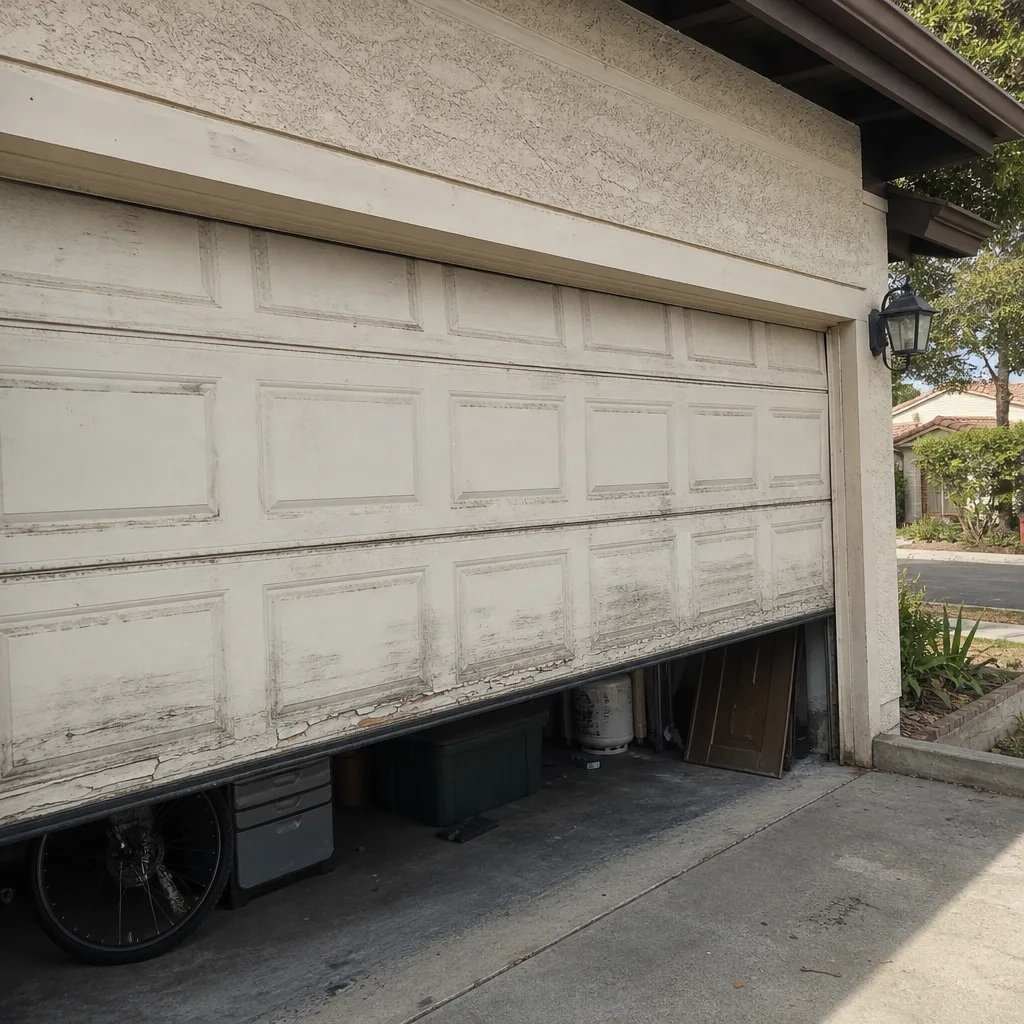 Before
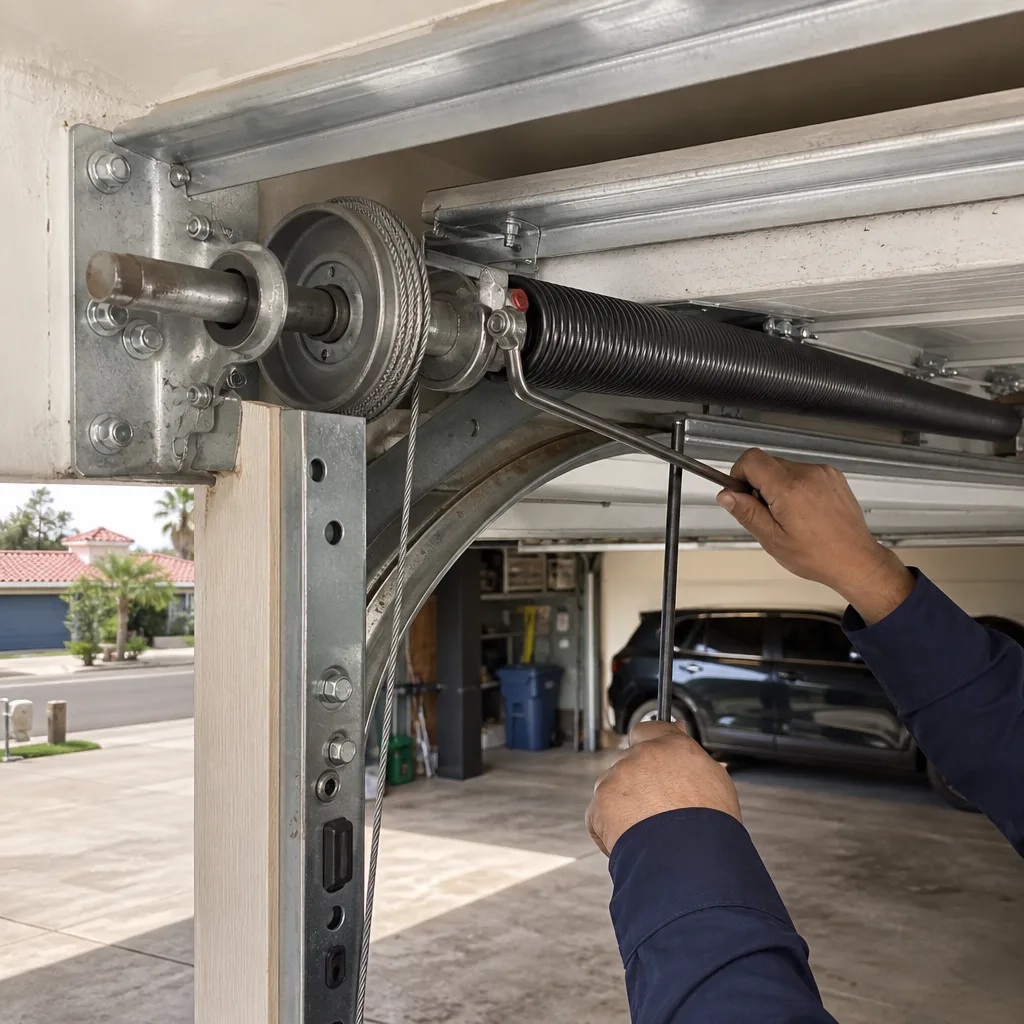 After
When to Call a Professional
Some garage door problems are safe to tackle on your own: lubricating rollers, cleaning photo eye lenses, tightening a loose hinge screw, adjusting the travel limits on an opener. But several situations demand a professional, both for safety and for the long-term health of your door. Call if you have a broken or visibly damaged torsion spring, a frayed or snapped lifting cable, a door that has come off its tracks, or a door that’s sagging on one side. These are all conditions where the door can move unexpectedly and cause serious injury. Call if your door is more than 7 years old and has never had a spring inspection. Call if you’ve tried everything in this guide and the door still misbehaves.
Carriage House Garage Door Co offers free estimates in Irvine. Call (866) 472-7503 and we’ll diagnose the problem over the phone first. If it’s something you can handle yourself, we’ll tell you that honestly. If it needs a professional, we’ll give you a written price before any work starts.
Frequently Asked Questions
Most garage door repairs in Irvine fall between $120 and $450, depending on the part and the labor involved. A sensor alignment or a travel limit adjustment might be $90 to $150. A roller replacement is typically $120 to $200. A spring replacement runs $250 to $450 for a standard torsion spring, including labor. An opener gear replacement is usually $150 to $250. Call (866) 472-7503 for an exact quote. Estimates are free, and the price is agreed before work begins.
Yes, if the issue is a photo eye alignment, a dirty sensor lens, or an obstruction in the door path. No, if the issue is a broken spring, a snapped cable, or a bent track. Start with the manual balance test. If the door lifts smoothly but still won’t close, check the photo eyes and the force settings. If the door is heavy or uneven, call a professional. The wrong DIY fix on a door with a spring problem can create a far more expensive repair and a serious safety hazard.
On chain-drive openers, this is typically a stripped gear inside the opener unit. The motor runs, the gear spins, but the teeth are worn down and can’t drive the chain. This is a common issue on Craftsman and older LiftMaster openers after 7 to 10 years of use. The gear replacement takes about an hour and costs far less than a new opener. We see this specific failure regularly in Irvine homes with original openers from the early 2000s.
In the Irvine area, a standard torsion spring lasts 7 to 10 years under normal use, which is roughly 10,000 to 15,000 cycles. Heavy use, like four or more open-close cycles per day, shortens that to 4 to 6 years. Coastal humidity and garage heat both accelerate metal fatigue. If your spring is over 7 years old, have it inspected. A replacement before failure costs less than a repair after a spring snaps, because a snapped spring can also damage the door, the opener, and the cables.
No. The price we quote before the work starts is the price you pay. We diagnose the door first, explain what we found, and give you a written estimate. You approve it before we touch anything. If we find an additional problem during the repair, we’ll show you and get your approval before doing any additional work. Our reputation in Irvine depends on this. No surprises on the invoice.
That depends on the door’s condition, age, and how well it’s been maintained. A door with a broken spring and decent panels is almost always worth repairing. A door with rusted-out bottom panels, failing insulation, and a seized track system is probably better off replaced. If your door is a custom carriage house style with architectural value, repair almost always makes more sense than replacement. If your door is builder-grade steel and 15 years old, replacement gives you better insulation, quieter operation, and a fresh 30% of your home’s street-facing appearance. We’ll give you a straight answer, not a sales pitch. That’s the point of being brand-agnostic: the right recommendation is based on your door, your budget, and your home, not on what we have in stock.
The Bottom Line
Your garage door is a system, and the best troubleshooting approach treats it that way. Listen to the noise, watch the speed, and test the balance before you replace anything. Split the problem into opener issues and door issues, because the right fix depends on that split. Run the two safe tests: the manual balance test and the force sensor test. Know which fixes are safe for you to make and which ones put you at risk or void your warranty. And if your door is over 7 years old with original springs, get them inspected before they fail. Call Carriage House Garage Door Co at (866) 472-7503 for a free estimate in Irvine. We’ll diagnose the problem, explain what we found, and give you a price before any work begins. One company for the whole system. The right door for your home.
Written by the team at Carriage House Garage Door Co, serving Irvine since 2013. Explore more guides & resources on our blog.