

Last updated October 30, 2026
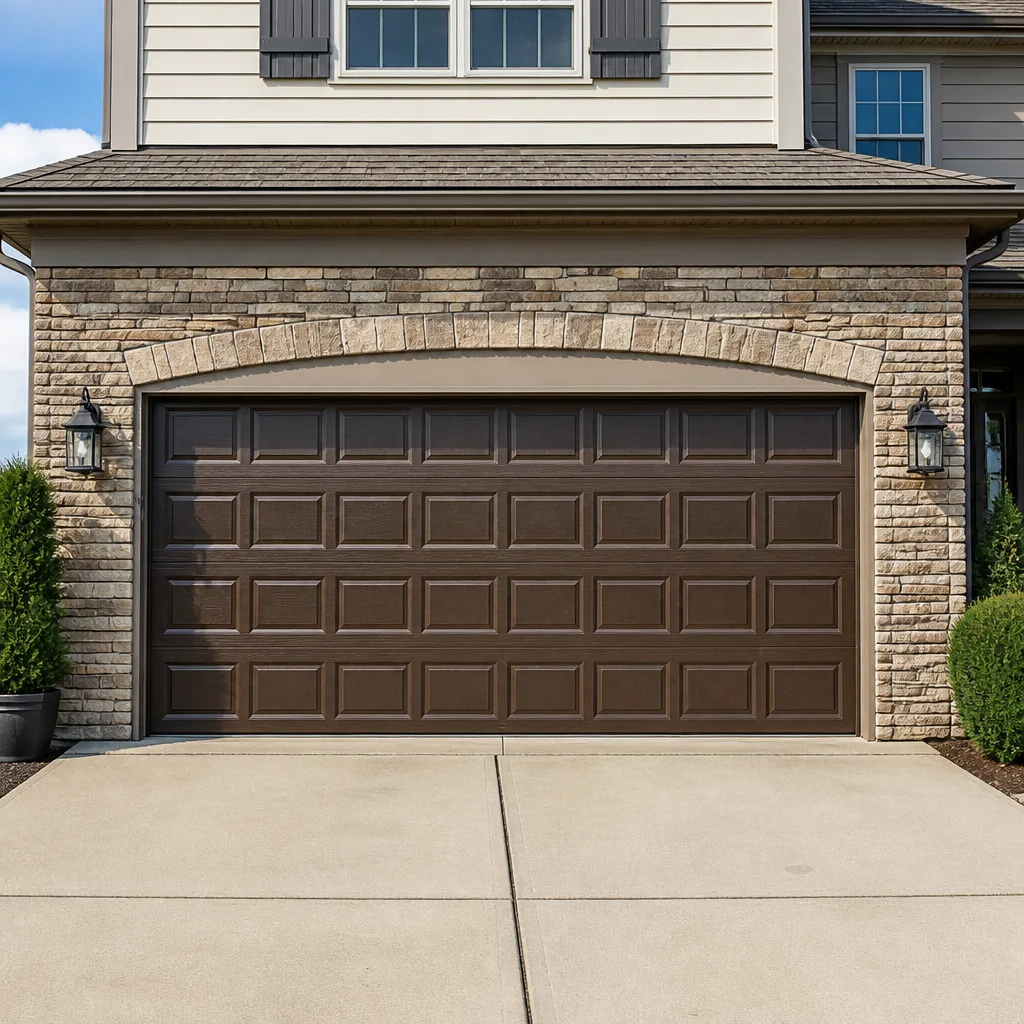 Raised-panel steel
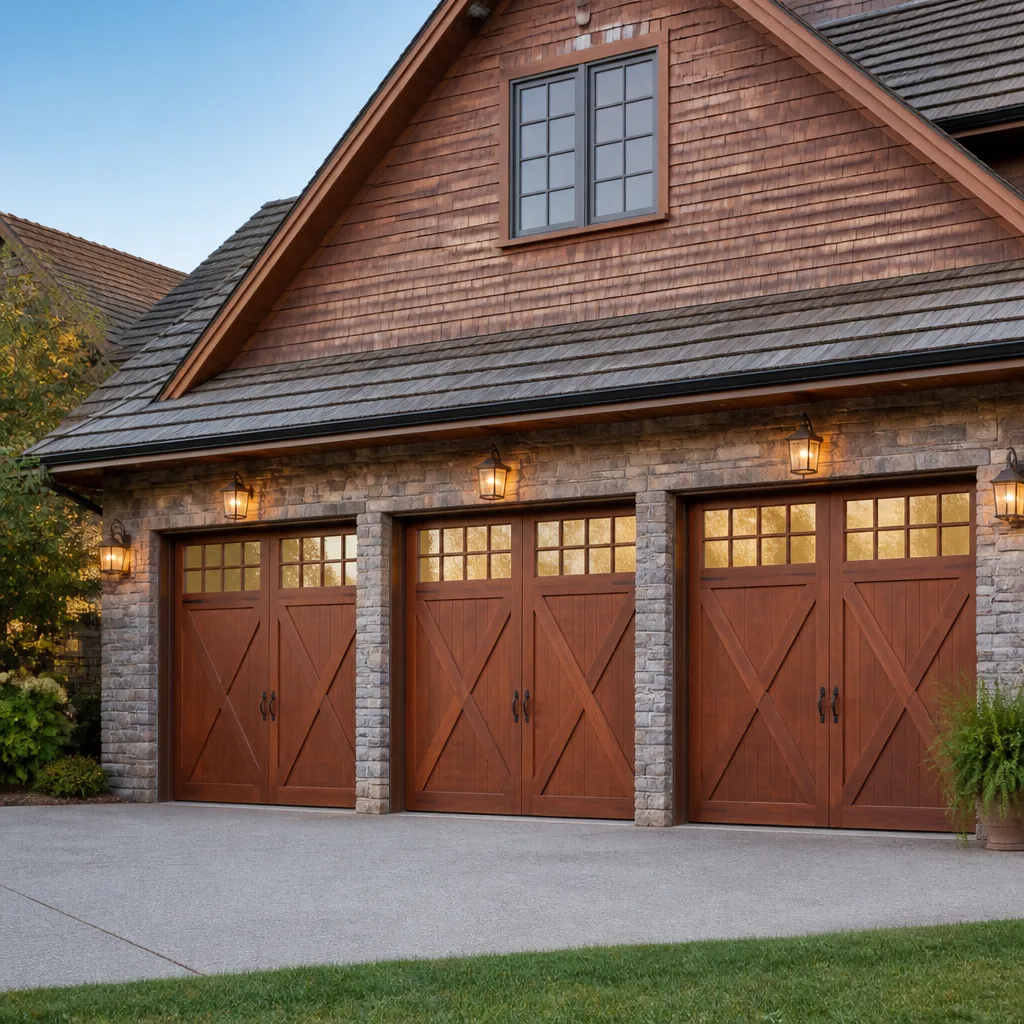 Carriage house
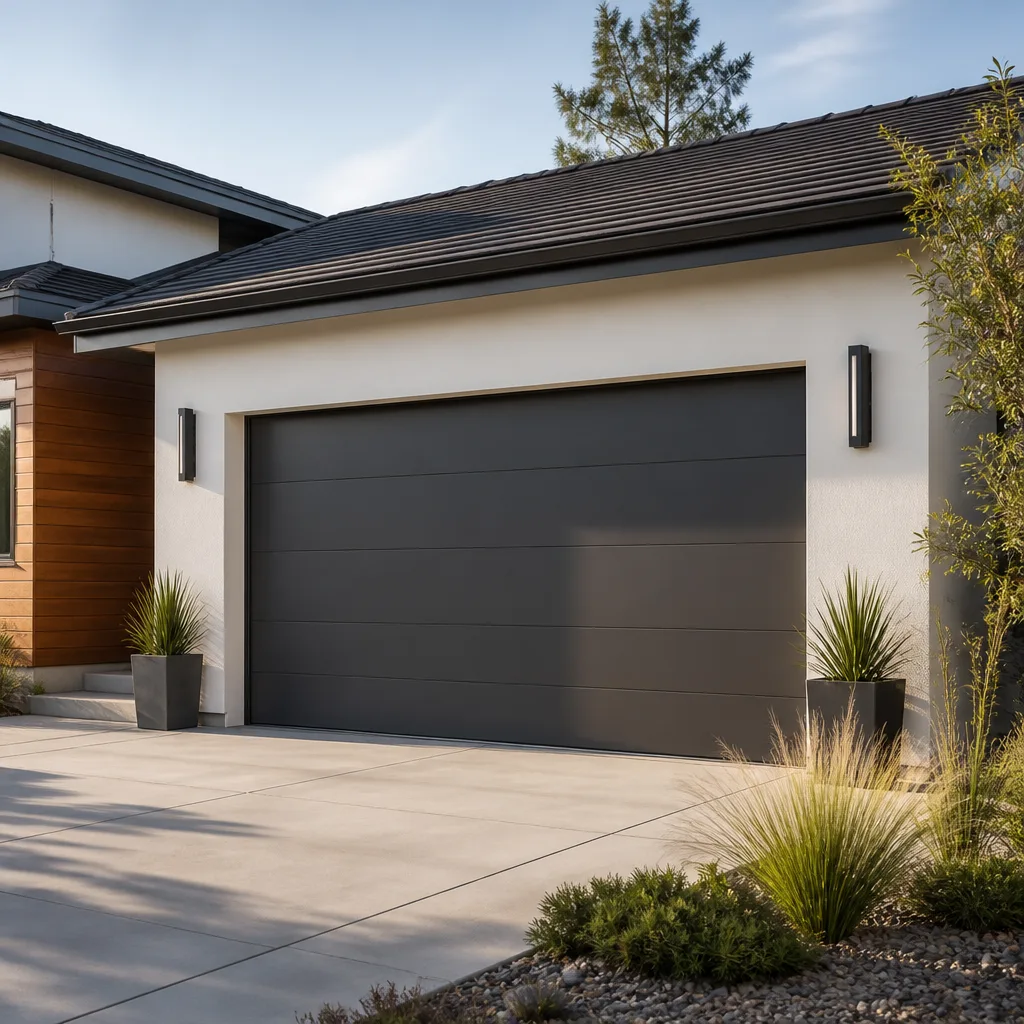 Modern flush
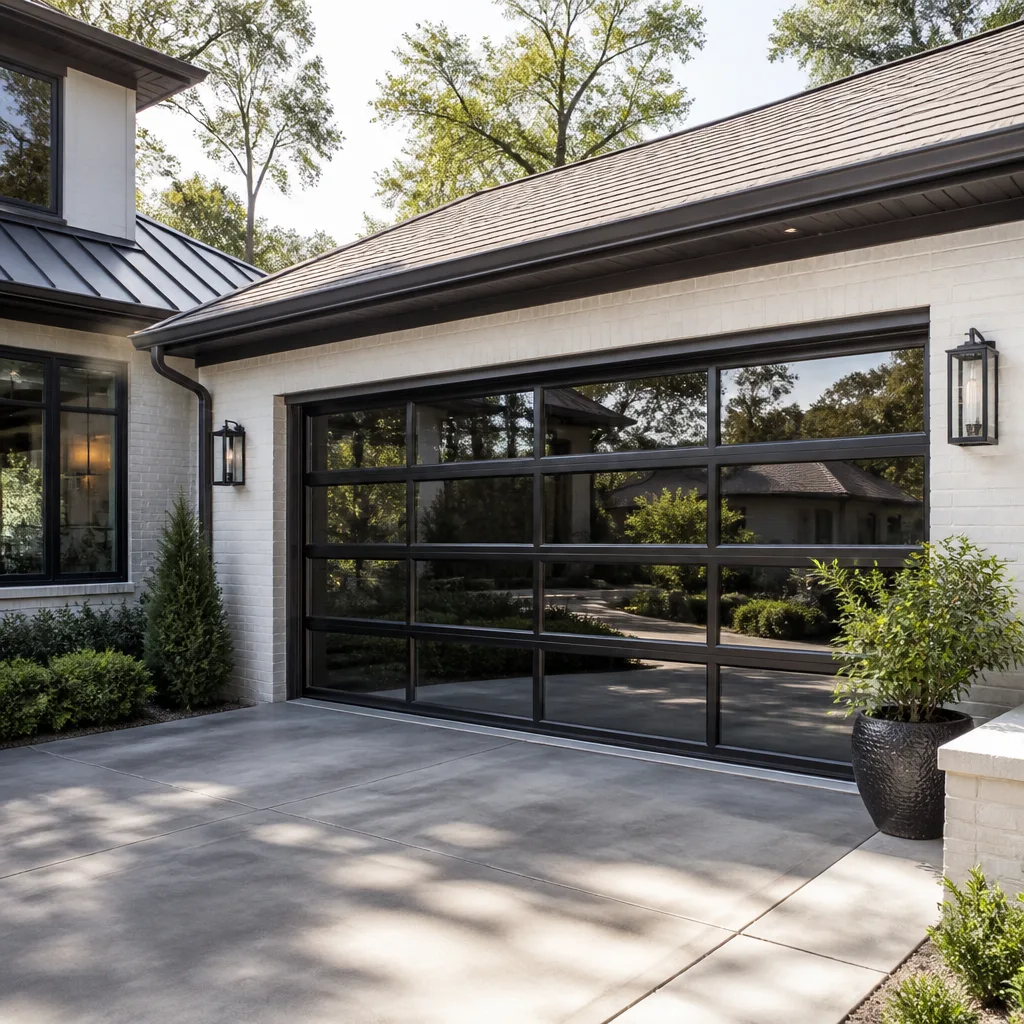 Full-view glass
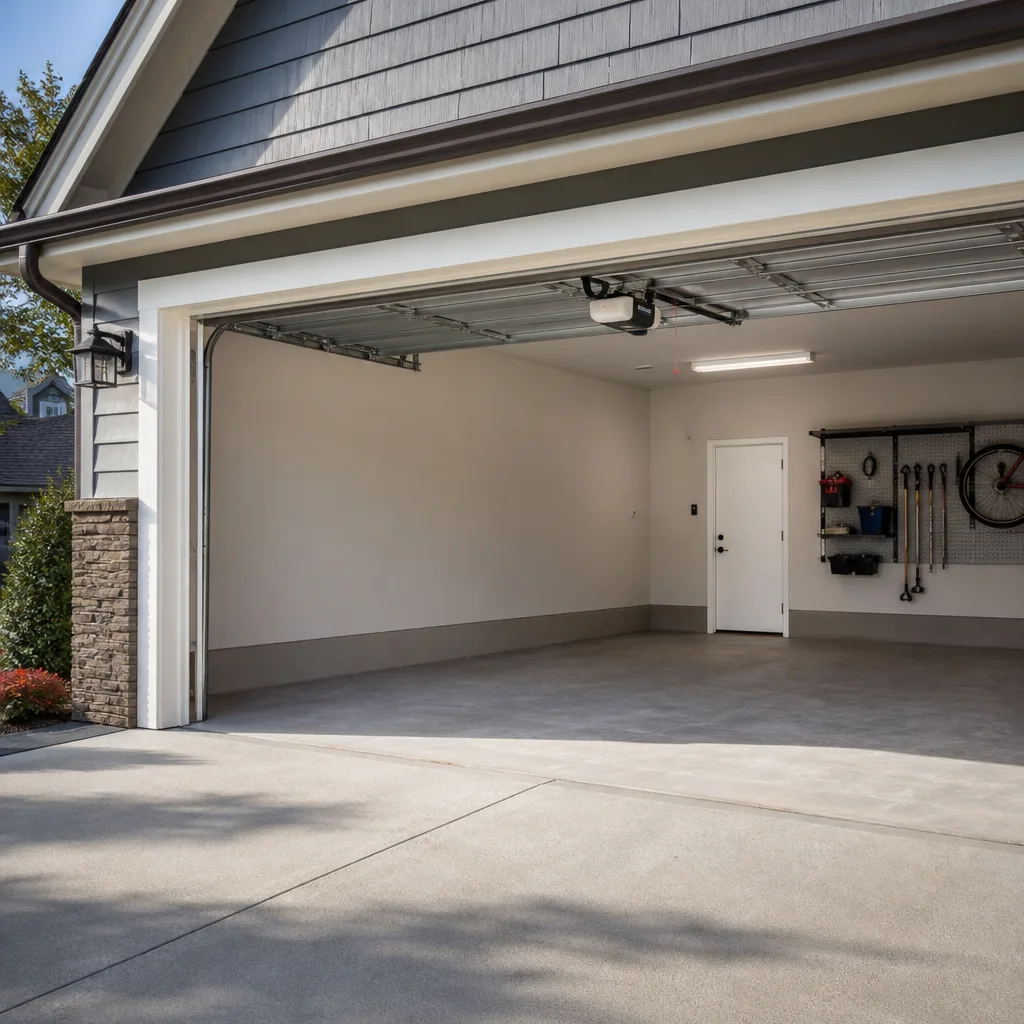 LiftMaster openers
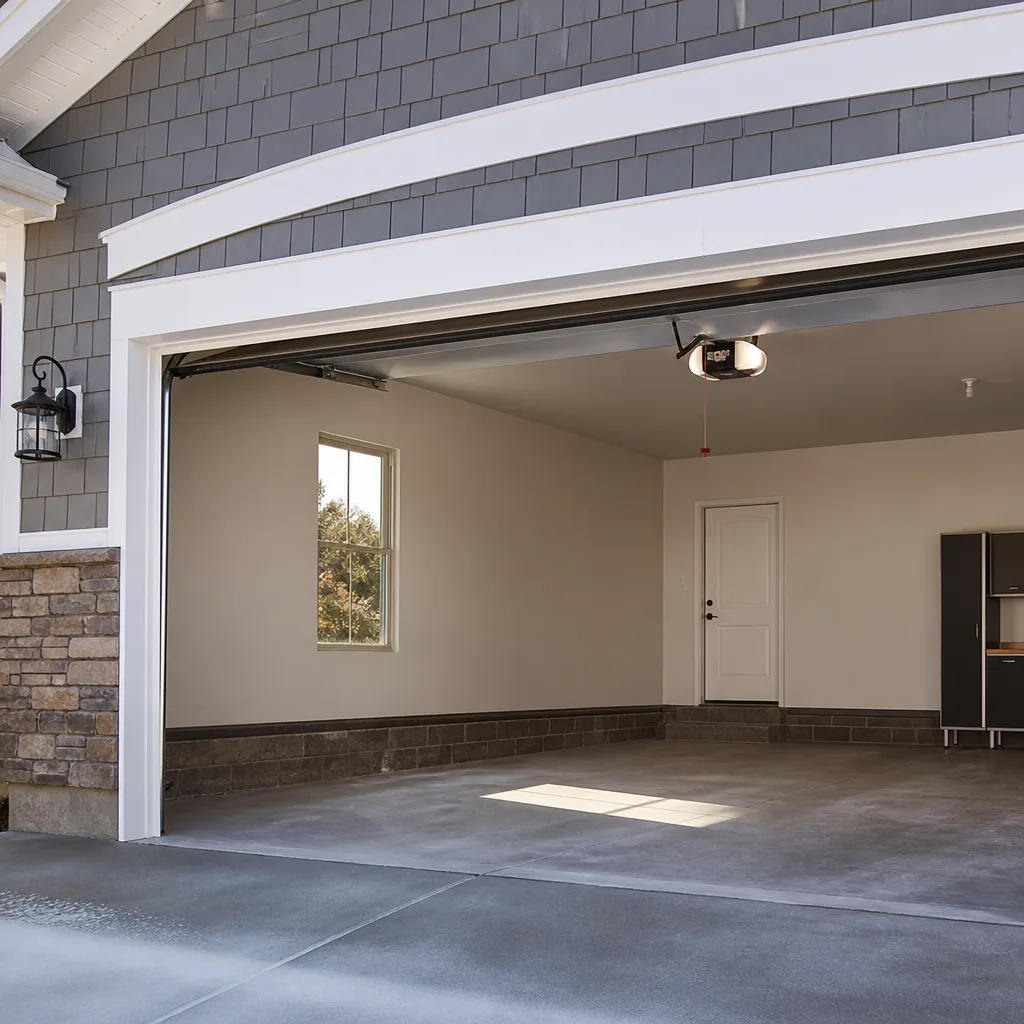 Chamberlain openers
Full 25-point door and opener safety check with every visit - springs, cables, rollers, tracks, and your LiftMaster or Chamberlain opener included
You get a price before we start. It does not change when the truck arrives.
Get your free estimateGarage Door Warning Signs: A Irvine Homeowner’s Reference Guide
Most garage door guides wait until the door fails before telling you what happened. We think that’s backwards. Here’s a number that surprises most Irvine homeowners we talk to: roughly seven out of ten garage door breakdowns we respond to showed a detectable warning sign two to four weeks before the failure. A hesitation. A new sound. A panel gap that wasn’t there last month. The catch is that the early signals in Irvine don’t always match what generic online guides describe, because our climate and daily-use patterns create a specific failure profile. This guide walks through the subtle indicators that matter in Irvine, what they mean mechanically, and which ones you can safely monitor versus which ones need a technician’s eye. For more guides & resources, visit our blog. By the time you finish, you’ll know the difference between a $40 adjustment and a $600 repair, and you’ll know it before the door makes that decision for you.
Quick Answer
The earliest garage door warning signs in Irvine are a half-second hesitation before movement, a door that sits unevenly in the opening, a new or changing sound during operation, and a door that reverses or bounces slightly after closing. These four indicators are measurable, tied to specific components, and in Irvine’s heat and coastal air, they often appear weeks before a full failure. If the hesitation happens at the start of travel, it’s usually opener-side; if the door feels heavy or drops unevenly, it’s usually spring- or cable-side. Catching these at stage one typically costs a fraction of an emergency repair.
Styles & brands we work with
Table of Contents
- The Half-Second Hesitation: Spring-Side vs. Opener-Side
- Uneven Panel Gaps: What a Crooked Top Edge Tells You
- Sound Profiles: Cable Fray vs. Bearing Failure vs. Track Wear
- The Door That Reverses After Closing: A Safety System Calling for Help
- Photo-Eye False Alarms and Irvine’s July Heat
- The Silent Failures: Rust, Balance, and the Things That Don’t Make Noise
- Five Checks Any Irvine Homeowner Can Do This Weekend
- Common Mistakes to Avoid
The Half-Second Hesitation: Spring-Side vs. Opener-Side
A garage door that pauses briefly before lifting isn’t “just getting older.” It’s a measurable symptom with a specific cause, and in Irvine, that cause is usually one of three things: a torsion spring losing tension, an opener’s capacitor starting to degrade, or a door that’s drifted out of balance. The diagnostic key is where the hesitation happens and what it sounds like.
When the door hesitates and the motor strains audibly before the panels begin moving, you’re almost always looking at the opener’s start capacitor or its drive gear. The motor is trying to move the door, but the initial surge of power that should get things rolling isn’t arriving cleanly. On LiftMaster and Chamberlain units, this often sounds like a low hum for a beat, then normal travel. On Genie screw-drive openers, the hesitation is quieter, more of a soft click before motion.
When the hesitation is in the door itself, meaning the opener sounds fine but the panels seem slow to respond, the torsion spring is the usual suspect. Springs lose tension gradually, not all at once, and Irvine’s relatively stable year-round temperatures actually mask this decline. There’s no big freeze-thaw cycle to expose a weakening spring the way you’d see in colder climates. Instead, the door gets subtly heavier each month, and the opener compensates by working harder, until one day the spring snaps mid-cycle.
Here’s the practical distinction: if you disconnect the opener using the red emergency release cord and the door feels noticeably heavier to lift by hand than it did six months ago, the spring is fading. If the door lifts easily by hand but still hesitates under opener power, the problem is opener-side. We’ve walked into Irvine garages where a homeowner spent $300 on a new opener when the real issue was a $180 spring replacement, and the opposite: a brand-new spring set installed on a door whose opener had a failing capacitor. Misdiagnosis in either direction means money spent on the wrong component. This is why a technician who works across both halves of the system, the door structure and the opener mechanism, catches the issue the first time rather than treating one part in isolation.
Uneven Panel Gaps: What a Crooked Top Edge Tells You
Stand outside your closed garage door and look at the gap between the top panel and the header, the horizontal frame piece above the door. In a healthy door, that gap should be consistent from left to right. If one side sits tighter than the other, or the top edge of the door looks slightly tilted, you’re seeing a structural signal that’s easy to dismiss but expensive to ignore.
Uneven panel gaps in Irvine homes point to one of three underlying conditions, and each has a distinct fix. The most common is a torsion spring that’s lost tension on one side. In a standard torsion system, a single spring or pair of springs winds up on a shaft above the door. When one spring weakens or one side of a single spring’s coil loses grip, the lift force becomes asymmetric, and the door starts sitting crooked. Left uncorrected, the imbalance accelerates wear on the cables, the rollers, and the hinges on the heavy side.
The second cause is track misalignment. Irvine homes built in the 1990s and 2000s often have doors on two-car garages that see daily use. Over thousands of cycles, the vertical tracks can drift outward by a quarter inch or less at the bottom. That’s enough to make the door sit unevenly in the opening and to cause the rollers to ride harder on one side. The fix is realigning the track and re-securing the brackets, not replacing the door.
The third cause, less common but more serious, is a stretched or fraying lift cable. Cables on residential doors in Irvine’s climate can develop internal strand breaks from salt air, especially in homes within a few miles of the coast. The outside of the cable looks intact, but its load-bearing capacity has dropped. The door starts listing slightly, and the cable eventually snaps under tension. If you see the uneven gap and also notice the cable looking slightly fuzzy or wavy where it wraps around the drum, stop using the door and have it inspected.
What you’re looking at is the difference between a $40 spring adjustment or cable replacement and a full spring system rebuild. The gap itself doesn’t hurt anything, but what it tells you about the spring and cable system matters a great deal. We’ve seen doors in Turtle Rock and Woodbridge with the same symptom and wildly different underlying causes, which is why eyeballing the top edge is step one in any serious diagnostic.
Sound Profiles: Cable Fray vs. Bearing Failure vs. Track Wear
Garage doors talk. The problem is that most homeowners don’t speak the language, and generic advice like “grinding means trouble” isn’t precise enough to act on. Here’s what specific sounds mean in Irvine, where daily thermal cycling and coastal humidity shape how components degrade.
A cable beginning to fray produces a high, thin ticking or chirping sound as the door moves. It’s not consistent. It happens on certain sections of travel, often when the cable wraps over itself on the drum. If you hear it near the top of the door on one side only, it’s cable. The sound comes from individual wire strands snapping under load, one at a time. A fraying cable is a critical warning, not because the cable itself is expensive, but because when it lets go, the door can drop violently or bind against the track.
A failing roller bearing sounds entirely different: a gritty, rumbling grind that follows the door through its full travel and seems to come from inside the track. Nylon rollers on Irvine doors last a long time, but when the sealed bearing inside dries out and the ball bearings start scoring each other, the roller stops rolling and starts sliding. That’s the grinding. The fix is straightforward; replacing a set of ten rollers is standard preventive maintenance. But ignore it for a year and the flat-spotted roller carves a groove into the track, and now you’re replacing track sections too.
Track wear itself has a signature: a metallic scraping or a rhythmic “chuff-chuff-chuff” as the door passes a specific point. That’s a door that’s wandered out of alignment and is touching the track where it shouldn’t. Temperature swings in Irvine are milder than in the desert, but homes exposed to full afternoon sun on uninsulated garage doors still see steel tracks expand and contract daily. Over years, that movement works bracket fasteners loose. The sound is telling you that metal is touching metal in a way the design didn’t intend.
Then there’s the opener sound. A healthy belt-drive opener from Chamberlain or LiftMaster is almost silent, a soft whir with a click at each end of travel. A chain-drive opener is louder by design, a mechanical clatter that’s normal. When an opener’s gears start stripping, you hear a sharp ratcheting or a hollow clacking under load, distinct from the normal chain sound. That’s the plastic drive gear inside the opener housing failing. On some Genie models, it’s more of a buzzing with visible jerkiness in the door movement. The opener motor itself rarely dies; it’s usually the gear that strips, and that’s a repairable failure if caught before the motor burns out from fighting it.
The Door That Reverses After Closing: A Safety System Calling for Help
Here’s the scenario: you press the button, the door travels down, touches the ground, and then immediately reverses back up an inch or two, or sometimes all the way. Most people shrug and hit the button again. But that behavior is your door’s safety system actively preventing damage or injury, and in Irvine homes with daily multi-car traffic, it appears more often than most homeowners realize.
Since 1993, every residential garage door opener sold in the United States has been required to include an automatic reverse mechanism tied to either the photo-eye sensors or a contact sensor, and current openers use both. When the door reverses after closing, the open is trying to tell you one of three things: the close-force setting has drifted too low, the door’s travel limits have shifted, or the safety sensors are registering a false obstruction.
The most common cause is a close-force setting that’s borderline. On Chamberlain and LiftMaster openers, the force is adjustable through the wall console or the motor head. When the door encounters friction, perhaps from tired rollers, a slightly dry track, or heat-expanded materials in a sun-baked Irvine garage, the force required to close exceeds the setting, and the opener interprets the resistance as an obstruction. It reverses as designed. The “fix” of cranking the force higher is a bad one, because it overrides the safety logic that exists to protect people and pets. The correct response is to reduce the actual friction by addressing the rollers, hinges, and track alignment, then re-testing the force setting.
In other cases, the door’s down-limit has drifted. The opener thinks the floor is an inch above where the floor actually is, so when the door contacts the ground, the opener senses an unexpected impact and reverses. Re-setting the limit is a five-minute job with the right instructions for your opener model. Finally, there’s the photo-eye sensor at the bottom of the track. If it’s misaligned, dirty, or being hit by direct morning or late-afternoon sunlight, which is common on west-facing Irvine garages, it can trip just as the door completes its close, sending the door back up.
The critical point: the door reversing is not the problem. It’s the system working exactly as it was designed to. The problem is whatever condition is triggering it, and that condition, left unaddressed, doesn’t get better on its own. If your door does this more than once a week, treat it as a symptom, not a quirk.
Photo-Eye False Alarms and Irvine’s July Heat
Irvine’s summer creates a distinct pattern we see every year: a spike in false photo-eye obstruction errors starting in July, peaking in August, and fading in late September. Homeowners call describing a door that closes halfway, reverses, and the opener lights blink in the classic obstruction signal. The sensors look clean. Nothing’s in the way. It just won’t close.
The culprit is infrared interference. Photo-eye sensors work by transmitting an infrared beam from the sending unit to the receiving unit across the bottom of the door opening. The system expects the beam to arrive uninterrupted. But when garage interiors heat up, which in Irvine’s inland neighborhoods like Northwood and El Camino Real regularly means 110 degrees or more in an uninsulated garage, the sensor housings expand. That expansion is enough to shift the beam alignment by a degree or two, which at six feet of distance puts the beam off the receiver lens. The result: a false “blocked” reading on every close attempt.
Sunlight is the second seasonal factor. Intense afternoon sun hitting the receiver lens can overwhelm the sensor, essentially blinding it. West-facing garage doors in Irvine are especially prone, and the problem shows up most in July and August, when the sun sits low and direct during the late afternoon hours homeowners are most likely to be parking. The third factor is dust. Irvine’s dry months coat the sensor lenses with a fine layer of particulates that diffuses the beam. Between the heat expansion, the sun angle, and the dust, three independent conditions converge in summer.
The practical fix on a hot day is to first clean both lenses with a dry microfiber cloth, then check that both sensor units point straight across at each other. Most units have small indicator lights; a steady light on both means alignment is acceptable. If the problem persists only on hot afternoons and never in the morning, it’s thermal expansion, and the longer-term answer is often remounting the sensors with a bracket that holds alignment better, or shading the receiver from direct sun. It’s rarely the sensor electronics themselves. In our experience across Irvine, the sensor is almost never the part that needs replacing. It’s the alignment environment that needs correcting.
The Silent Failures: Rust, Balance, and the Things That Don’t Make Noise
Not every warning sign announces itself. In fact, the failures that cost Irvine homeowners the most are the quiet ones: the rust creeping along the bottom of a steel door, the spring losing tension a fraction at a time, the hinges accumulating wear without ever squeaking. Here’s what’s happening underneath the surface.
Rust on the bottom panel is the slow killer of steel garage doors, and Irvine’s coastal influence matters more than most homeowners realize. Homes within a few miles of the coast get enough salt in the air to accelerate corrosion, especially on doors that face prevailing winds. A door in University Park or Quail Hill, further inland, faces less salt exposure but still deals with morning marine layer moisture. The clue is almost always at the bottom weather seal. Water wicks into the seam between the bottom retainer and the panel, sits there, and begins oxidizing the steel. You’ll see bubbling paint, a rust-colored drip line, or flaking metal along the bottom edge. By the time it’s visible from the driveway, the panel is usually past the point of patching. Replacing a bottom panel on a Clopay or Amarr door is doable, but catching the rust in its first season, while it’s still just a paint blister, is the difference between a seal replacement and a panel replacement.
Spring balance is the other silent failure. Torsion springs on an Irvine door that cycles four times a day are good for roughly 10,000 cycles, which translates to about seven years of typical use. Most springs don’t announce their age. They simply deliver slightly less lift each month, while the opener works harder to compensate. Homeowners don’t notice because the change is gradual. The test is simple and takes 60 seconds: pull the red release cord to disconnect the opener, then lift the door manually to waist height and let go. A balanced door stays put. A door that drops means the spring is fading. A door that shoots up means the spring is over-tensioned. Do this test twice a year, in spring and fall. It’s the single most useful diagnostic a homeowner can perform, and it costs nothing.
Hinge wear is quieter still. Most modern hinges on Irvine doors are steel with nylon bushings at the pivot points. When those bushings wear out, the hinge develops lateral play, meaning the panels can shift side to side slightly as the door travels. The door still opens and closes, and there’s no dramatic noise. But the cumulative movement stresses the panel joints, and over time, stresses the fasteners that hold the hinge to the panel. A door with loose hinges at every joint is a door that’s slowly tearing itself apart. Catching this means replacing hinges while the panel screw holes are still intact. Missing it means the screw holes wallow out, and now you’re dealing with panel repair or replacement.
Five Checks Any Irvine Homeowner Can Do This Weekend
None of these require special tools or mechanical skill. They require ten minutes and your attention. Do them twice a year, and you’ll spot most problems while they’re still inexpensive to fix.
- The Balance Test. Disconnect the opener with the red release cord. Lift the door halfway and let go. It should stay put. If it drops, call for a spring inspection. If it rises, the spring is over-tensioned. Both are correctable problems that only get more expensive with time.
- The Top-Gap Inspection. With the door closed, look along the top edge where the top panel meets the frame. Check that the gap is even left to right. Then check the side gaps between the door and the vertical tracks. Consistent gaps mean alignment is good. A widening triangle means something’s drifting.
- The Sound Recording. Open and close the door once, and pay attention with the car radio off and the garage quiet. Note any clicking, grinding, scraping, or chirping, and note where in the travel it happens. The location and timing tell you a lot about the component involved.
- The Roller Look. With the door closed, visually inspect the rollers on both vertical tracks. Look for flat spots on nylon wheels, rust on metal stems, or wobble. If any roller looks different from its neighbors, it’s worth a closer look from a technician.
- The Sensor Clean. Wipe both photo-eye lenses with a dry microfiber cloth. Confirm that the indicator lights on both units are steady, not flickering. If one is dark or blinking, you’ve found a power or alignment issue before it becomes a no-close scenario on a day you’re running late.
These five checks cover the failure modes that account for the majority of what we see in Irvine garages. They’re not a substitute for professional maintenance, but they are the difference between a homeowner who catches a problem early and one who discovers it at midnight with a car stuck inside.
Common Mistakes to Avoid
- Lubricating the wrong parts. Spraying WD-40 on nylon rollers and hinges is one of the more common mistakes we see in Irvine garages. WD-40 is a solvent, not a lubricant, and on nylon components it does more harm than good by washing out whatever grease remains. Use a silicone spray on rollers and a white lithium grease on metal-to-metal points, and skip the solvent sprays entirely.
- Ignoring the balance test because the door “works fine.” An opener can mask a failing spring for a long time. The door keeps opening, so everything seems functional. But the opener is doing work the spring should be doing, and that extra load is shortening the opener’s life. The balance test bypasses the opener and tests the spring directly, which is what you actually need to know.
- Adjusting the opener’s force settings to fix a reversing door. When a door starts reversing on close, the temptation is to turn up the close-force dial and solve the problem right now. The problem is that the door was reversing for a reason. Overriding the safety system without addressing the friction or alignment issue underneath is how doors end up closing on cars, bikes, and family members.
- Treating coastal rust as cosmetic. If you live west of the 405, the rust on your door’s bottom edge is a structural issue, not an appearance one. Salt air corrosion eats steel from the inside out, and what looks like a paint bubble is often the leading edge of a panel that’s already compromised. Address it in the first season or budget for a bottom panel replacement.
- Replacing the opener when the problem is the door, or the door when the problem is the opener. The garage system has two halves, the door structure and the opener mechanism, and problems in one half often masquerade as problems in the other. A technician who works on both sees the interaction clearly. A specialist in only one half tends to see every problem as belonging to that half, and that’s how you end up replacing parts that were never the issue.
- Waiting until the noise is “bad enough.” By the time a grinding roller or ratcheting gear sounds obviously wrong to an untrained ear, the damage has often progressed from component wear to collateral damage. The roller has scored the track. The gear has stripped and strained the motor. Early sounds are quiet because the problem is still small. That’s exactly when you want to address them, not after the damage grows loud enough to demand attention.
See the difference
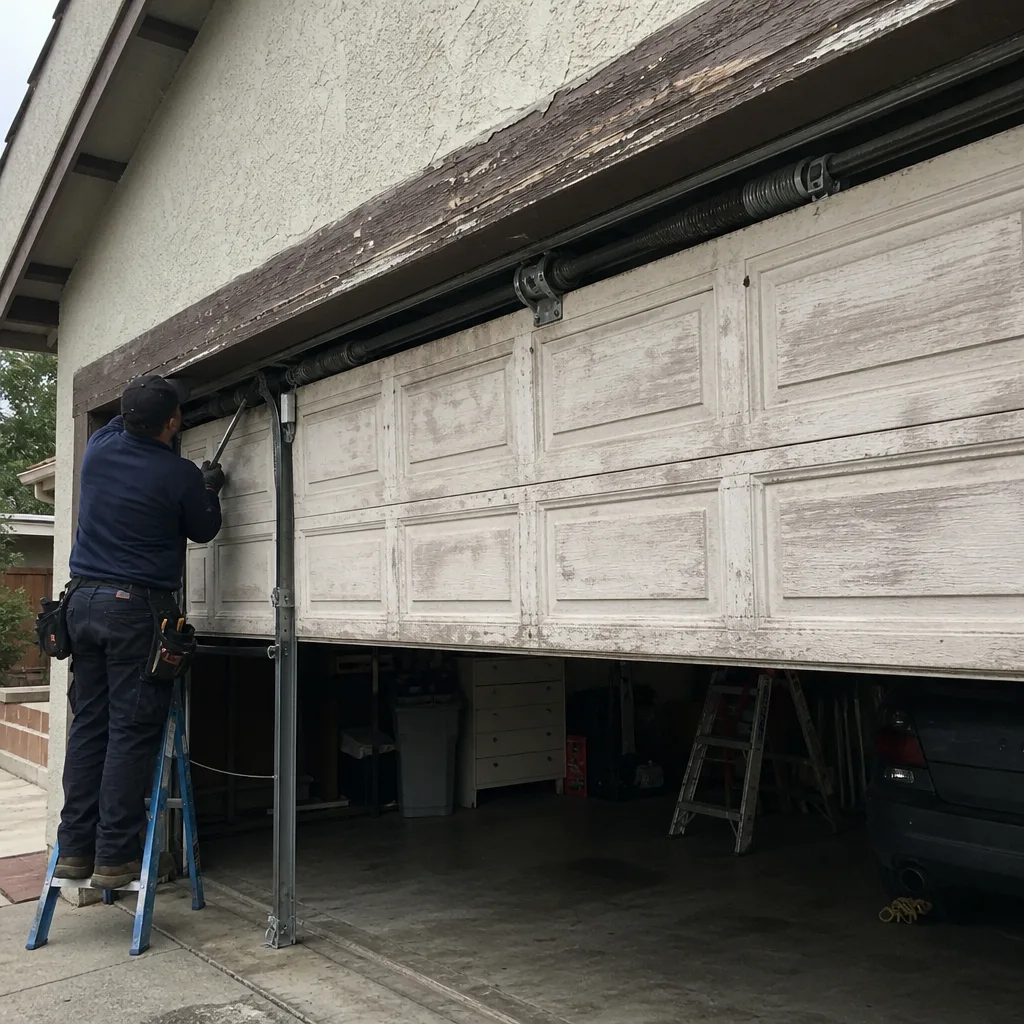 Before
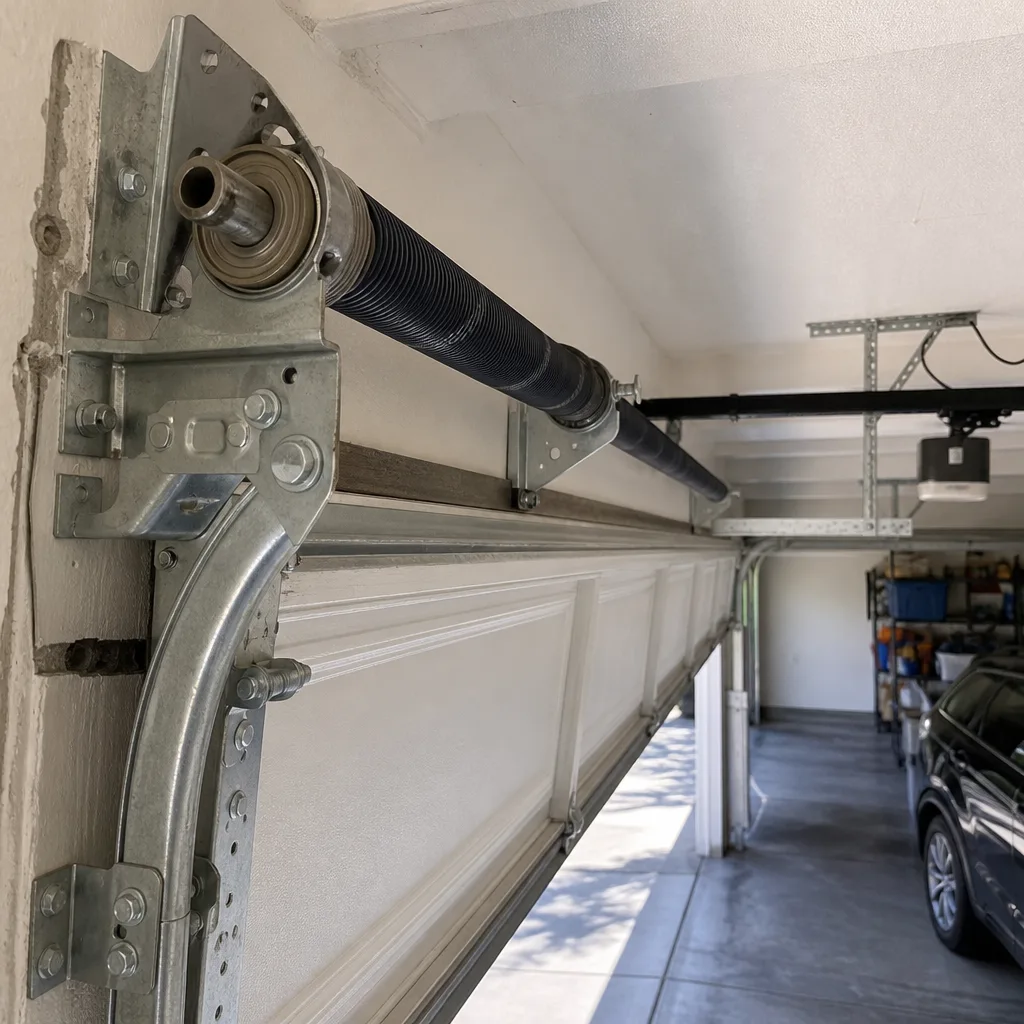 After
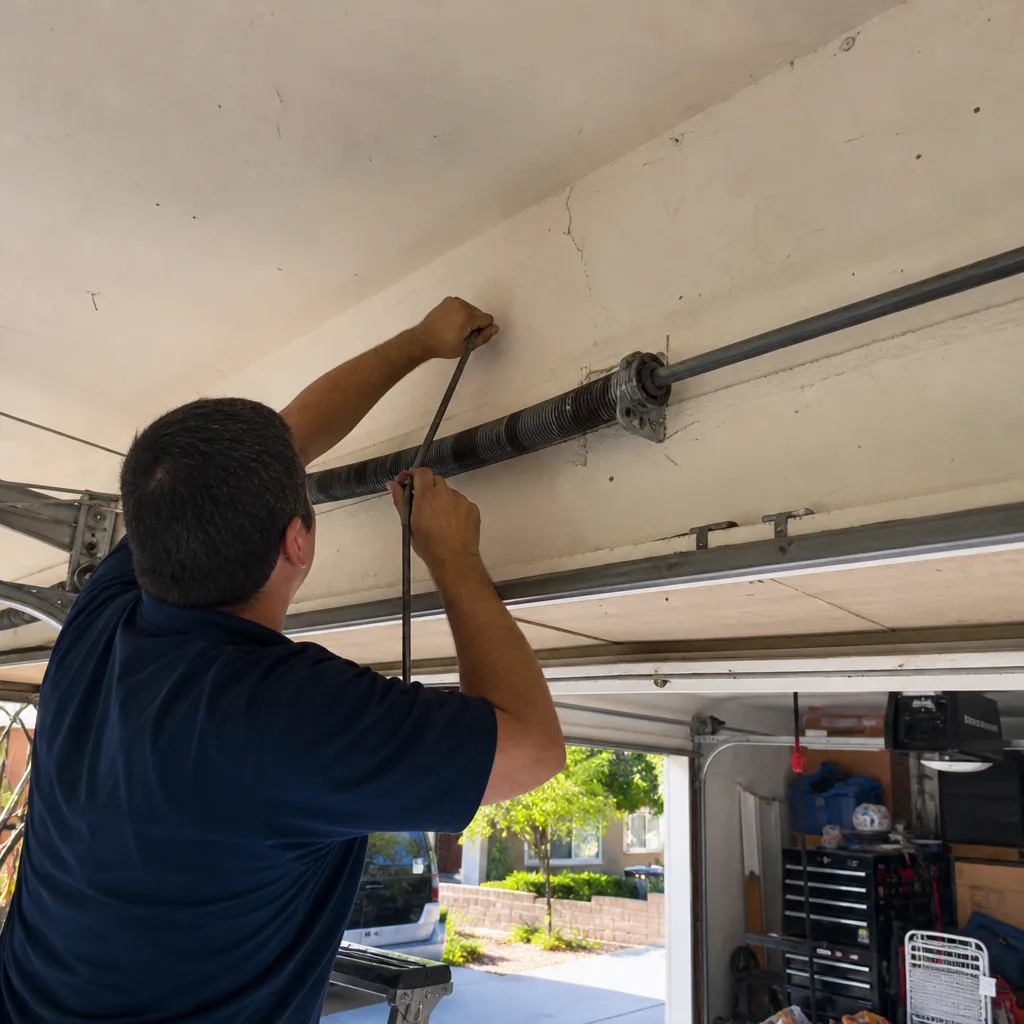 Before
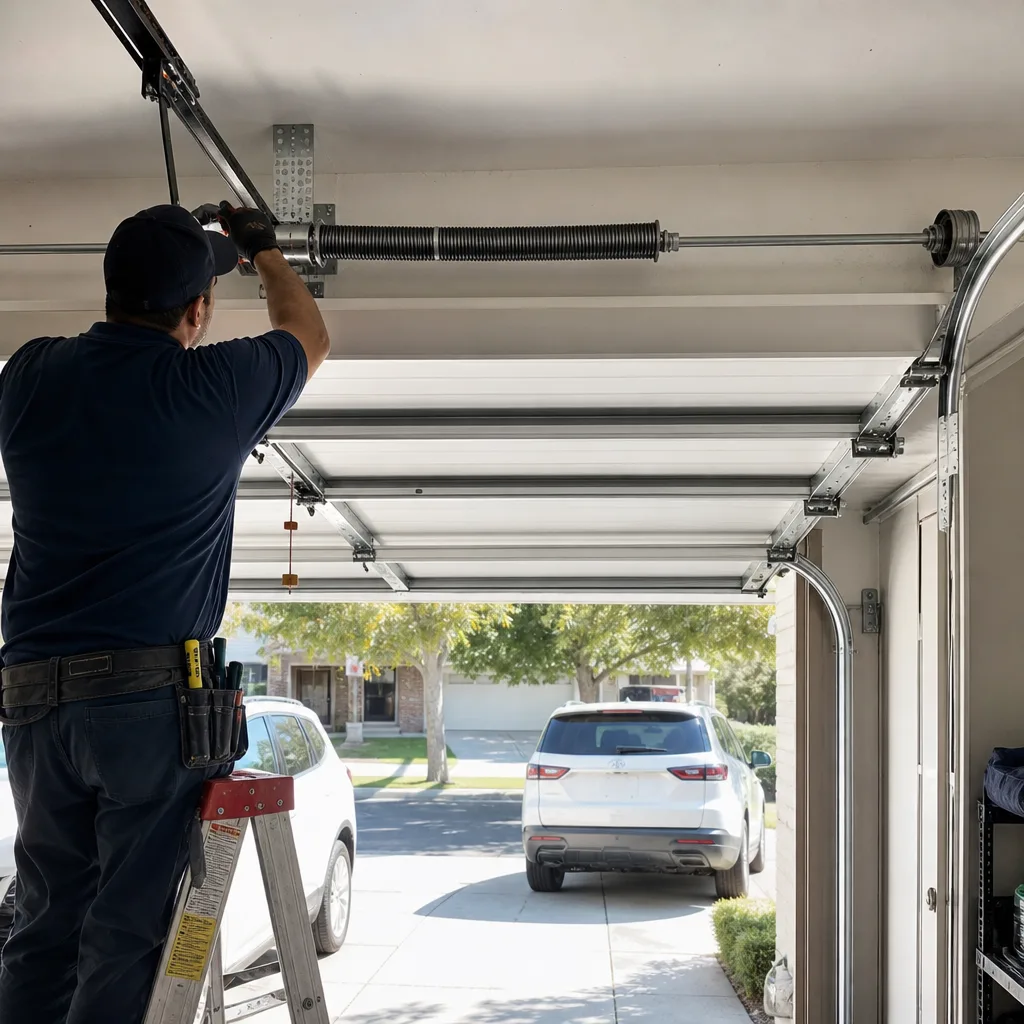 After
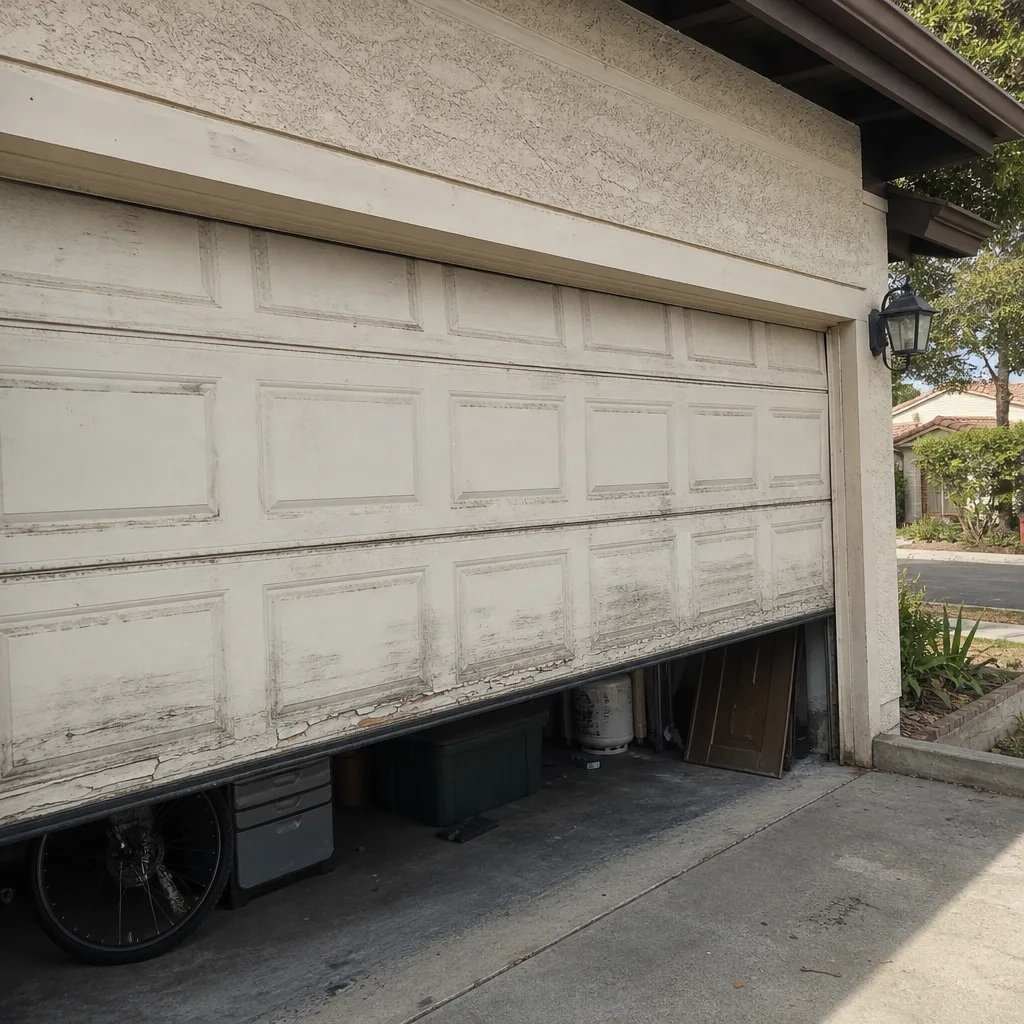 Before
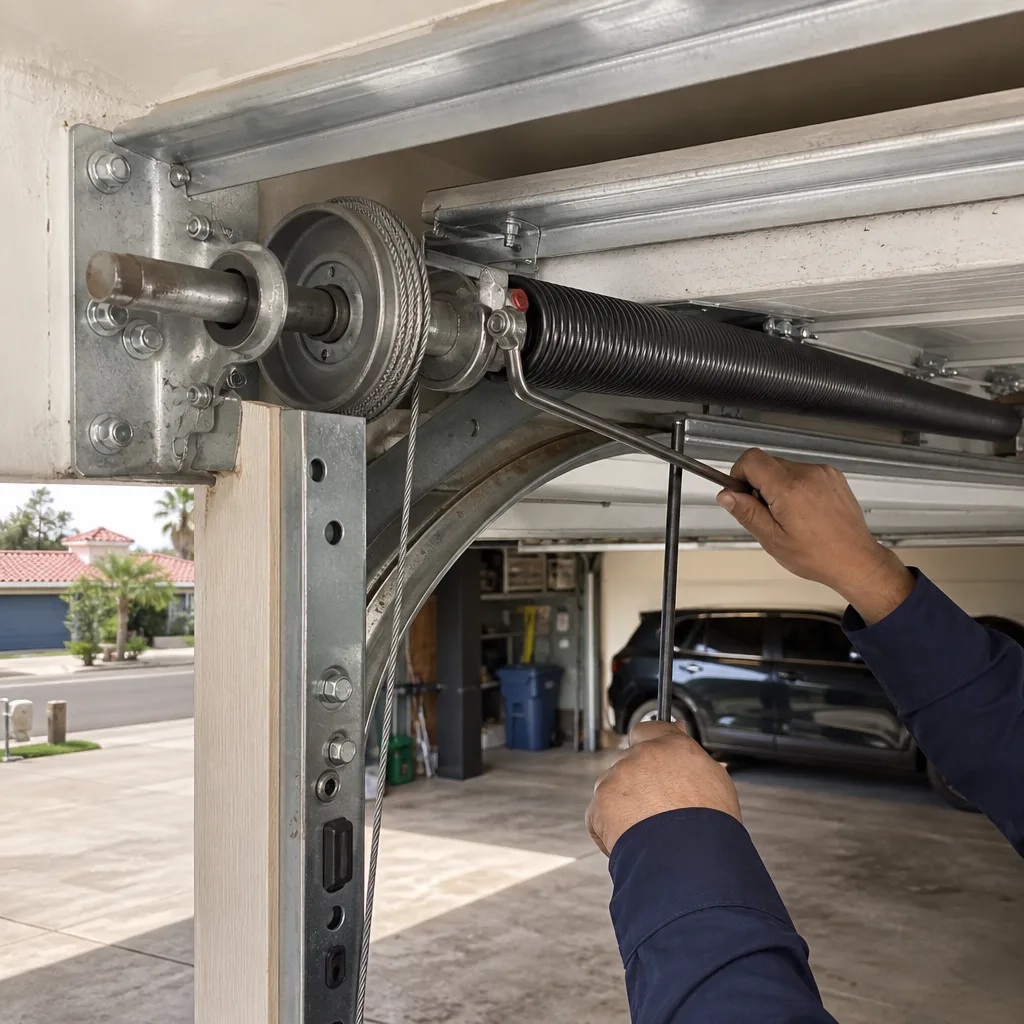 After
When to Call a Professional
Some garage door issues are homeowner-addressable, and some are not. Here’s the line: if the problem involves springs under tension, cables under load, or the door’s structural connection to the tracks, professional help is the only safe and sensible choice. Torsion springs store a tremendous amount of energy, and a spring letting go during a DIY adjustment can cause serious injury. Lift cables are the same; when they snap under tension, the results are unpredictable and dangerous. If your balance test shows a dropping door, if you see a fraying cable, if the top gap is growing week over week, or if the door has come off its track, stop using it and call someone who works on these systems daily.
Carriage House Garage Door Co offers garage door repair in Costa Mesa and throughout Irvine, with technicians who diagnose across the full system rather than treating the opener or the door in isolation. We work on Chamberlain, Genie, Clopay, Amarr, and every other major brand already installed in Irvine homes, so the recommendation you get is based on what your door actually needs, not what we’re incentivized to sell. For a free estimate in Irvine, call (866) 472-7503.
Frequently Asked Questions
Early-stage fixes in Irvine typically range from $100 to $250 for items like sensor realignment, roller replacement, hinge tightening, and force-setting adjustments. Spring replacement runs $250 to $400 on most single doors, cable replacement $150 to $250, and a full panel replacement can exceed $600 depending on the brand and door type. Catching the warning sign at stage one usually keeps the total under $200, while ignoring it until failure often means a $400 to $800 repair. If you’re weighing replacement versus repair, our Choosing the Right Garage Door Brand: A Buyer’s Guide for Irvine can help you plan ahead. Call (866) 472-7503 for an exact quote; estimates are free.
The hesitation is caused by either a weakening torsion spring that’s making the door heavier, or an opener component like a start capacitor or drive gear that’s failing. Disconnect the opener with the red release cord and lift the door manually to determine which one you’re dealing with. If the door feels heavy, it’s spring-side; if the door lifts easily but hesitates under opener power, it’s opener-side.
Yes, in specific ways. Summer heat in Irvine causes sensor brackets to expand and throw off photo-eye alignment, which is why false obstruction errors spike in July and August. Coastal salt air accelerates rust on steel doors for homes west of the 405. Dry summer dust coats sensor lenses and reduces beam strength. These are all fixable conditions, and understanding them helps you distinguish a weather-related false alarm from a genuine mechanical problem.
Most garage door repairs can be completed in a single visit, and many common fixes, like sensor realignment, roller replacement, and hinge tightening, are done the same day we arrive. Call (866) 472-7503 to discuss what your door is doing and we’ll tell you honestly what the repair looks like in time and cost before you commit.
Three indicators point to a failing spring: the door feels heavy when you lift it manually with the opener disconnected, the door sits unevenly in the opening with a crooked top gap, and the opener struggles audibly to lift the door. Torsion springs in Irvine last about seven years of typical use, so if your spring is approaching that age and showing any one of these symptoms, an inspection is timely and smart.
Yes, we work on virtually every brand already installed in Irvine garages, including Chamberlain, Genie, Clopay, and Amarr doors and openers. Our approach is brand-neutral: we diagnose what’s actually wrong and repair or recommend based on your home, your door, and your budget, not on a distributor relationship. You can learn more about our full service area starting at the Carriage House Garage Door Co home page.
The Bottom Line
Most garage door breakdowns in Irvine are predictable. The half-second hesitation, the crooked top edge, the new grinding sound, the door that reverses after closing. These are not random failures. They are signals from specific components, and each signal points to a repair that is dramatically cheaper at week one than at week six. In Irvine’s climate, the specific culprits are predictably coastal rust, summer heat effects on sensors, and springs that lose tension gradually without dramatic noise. Knowing what to look and listen for, and doing the five checks twice a year, puts you in control of the timeline. And when a signal shows up that you don’t recognize, or that points to springs and cables, garage door opener repair and full-system diagnosis are one call away. We also handle garage door installation for Irvine homeowners whose doors have reached the end of their service life. Call (866) 472-7503 for a free estimate, and we’ll help you read the signals before they become breakdowns.
Written by the team at Carriage House Garage Door Co, serving Irvine since 2013.